2017

Leica M10

The Digital Age: More Analogue than Ever

The sleek M10 heeds the growing demand for a return to the roots of the M-System, offering a stripped-down experience with no video or overload – just pure photography. Its CMOS sensor and classic ISO dial combine tradition and modernity to precise perfection.

Women’s Weapons

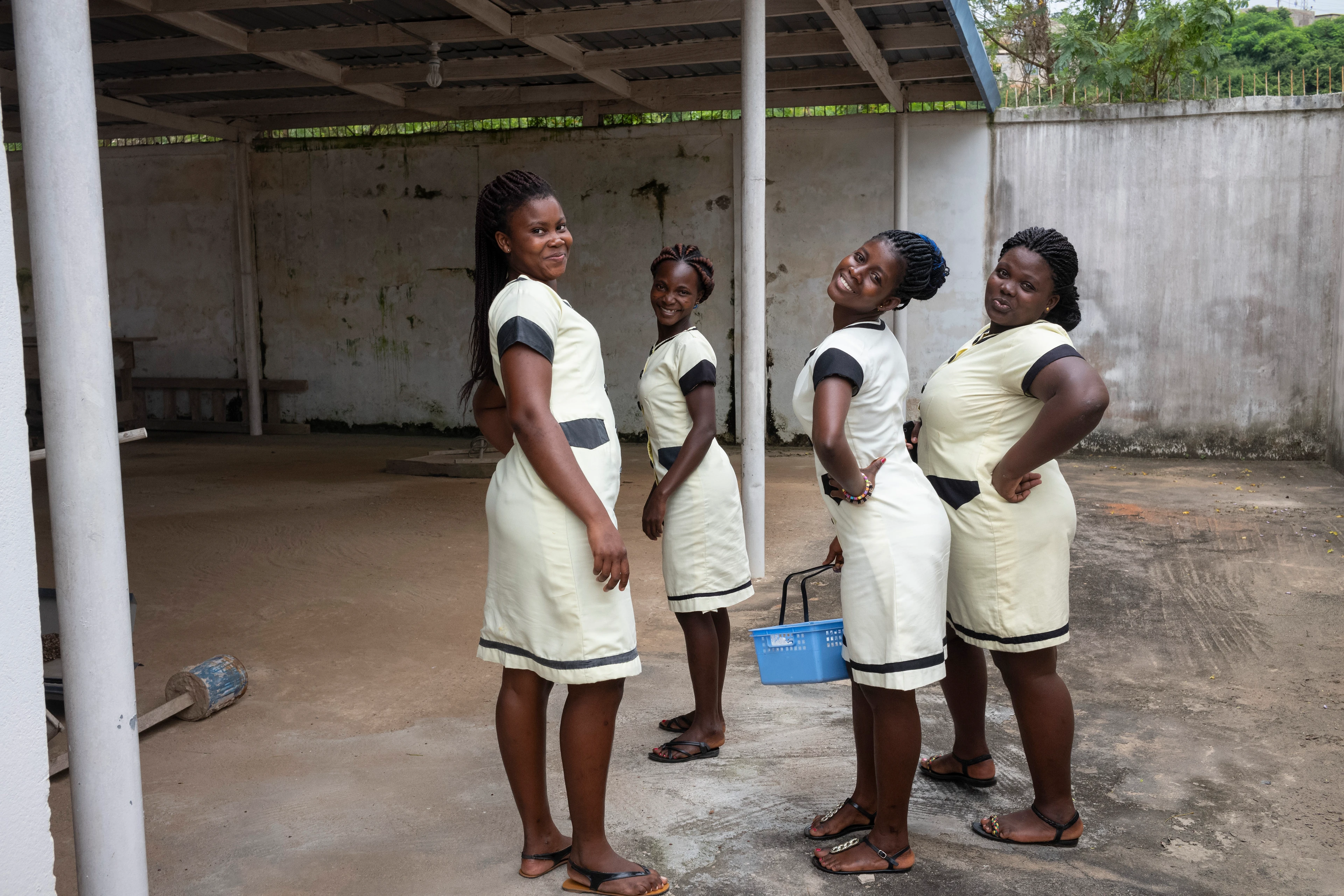
What does it mean to be a woman in the 2010s? To celebrate the Women’s March in 2017, we take a photographic look at the everyday lives of women around the world, away from the news and politics. The direct and sensitive images that follow, from various countries and series, reveal the real ‘women’s weapons’, such as resilience, warmth, acceptance and perseverance. Sometimes loud, sometimes quiet, sometimes casual, sometimes full of presence – but always truly lived, and therefore impossible to overlook.
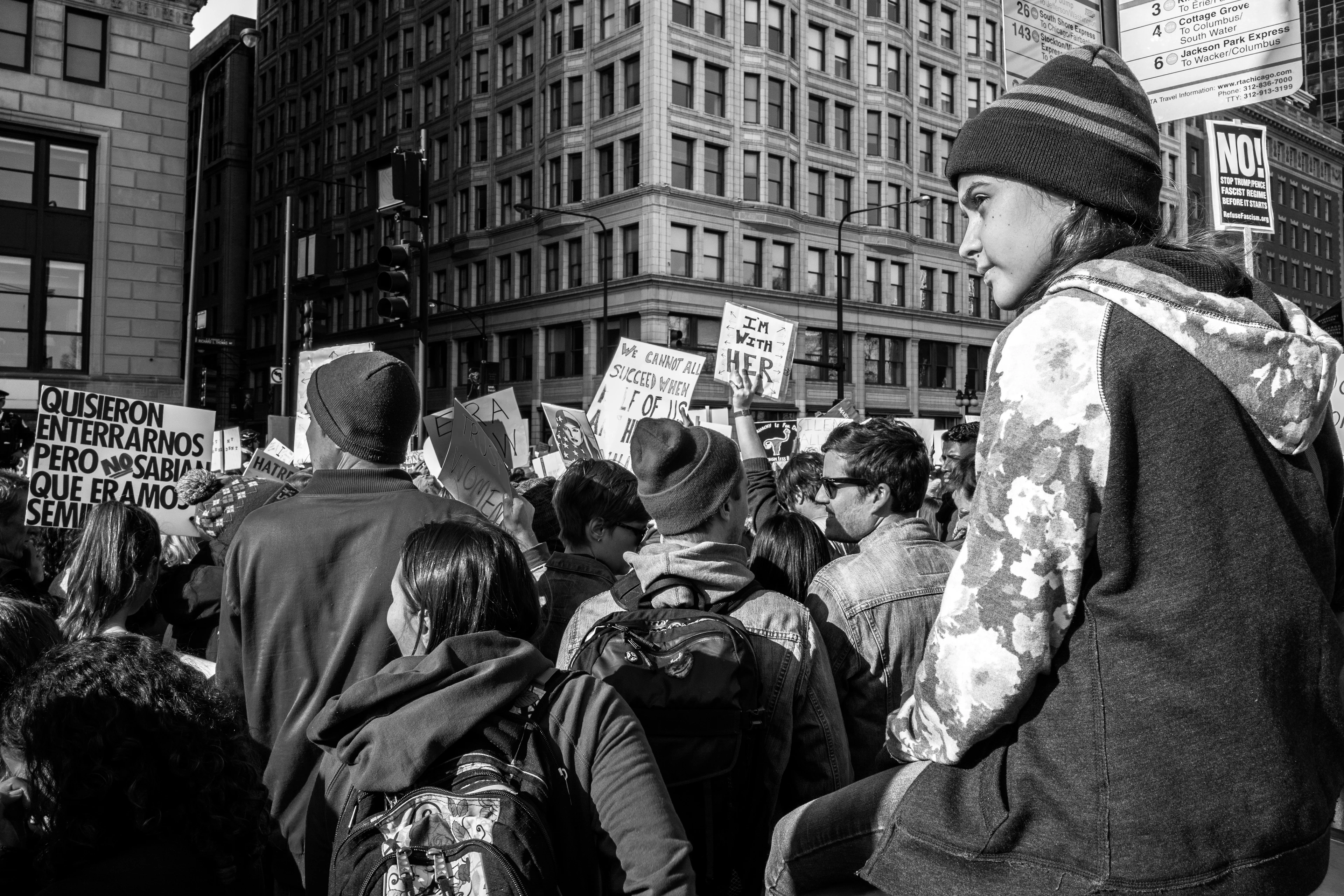
Black-and-white image: A girl sits elevated on the edge of a Women’s March demonstration, attentively observing the events in front of her amidst an urban environment and a crowd of people holding placards.
I'm With Her 2017, John Allen
© John Allen
Four African women wearing the same white dress pose for the camera in a covered courtyard, smiling happily.
From the series NOSOTRAS, Cape Coast, Ghana 2017, Graciela Magnoni
© Graciela Magnoni
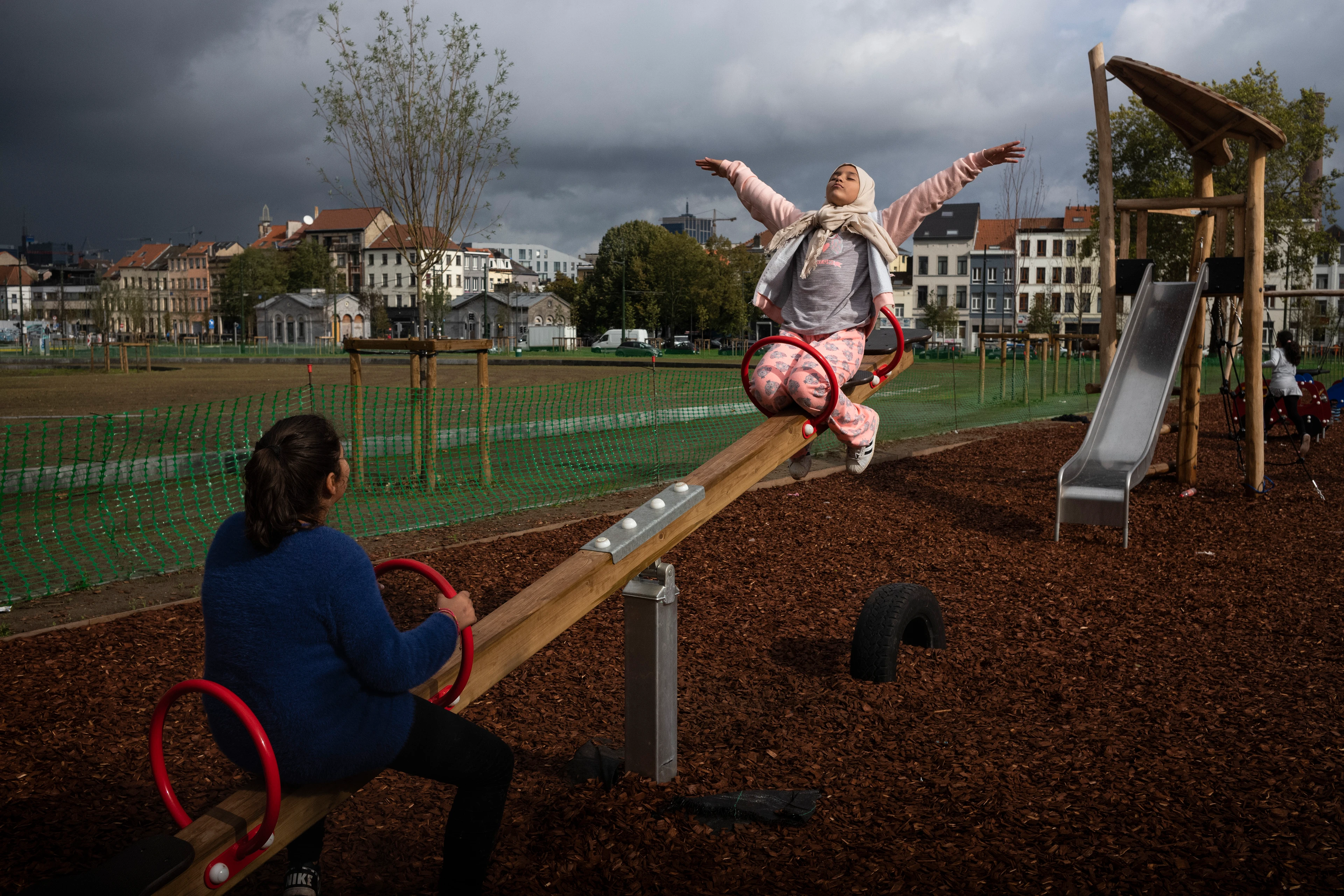
A mother and her older daughter wearing a headscarf sit on a seesaw in a playground. The child is in the air, with her arms outstretched and eyes closed.
From the series NOSOTRAS, Brussels, Belgium 2019, Graciela Magnoni
© Graciela Magnoni
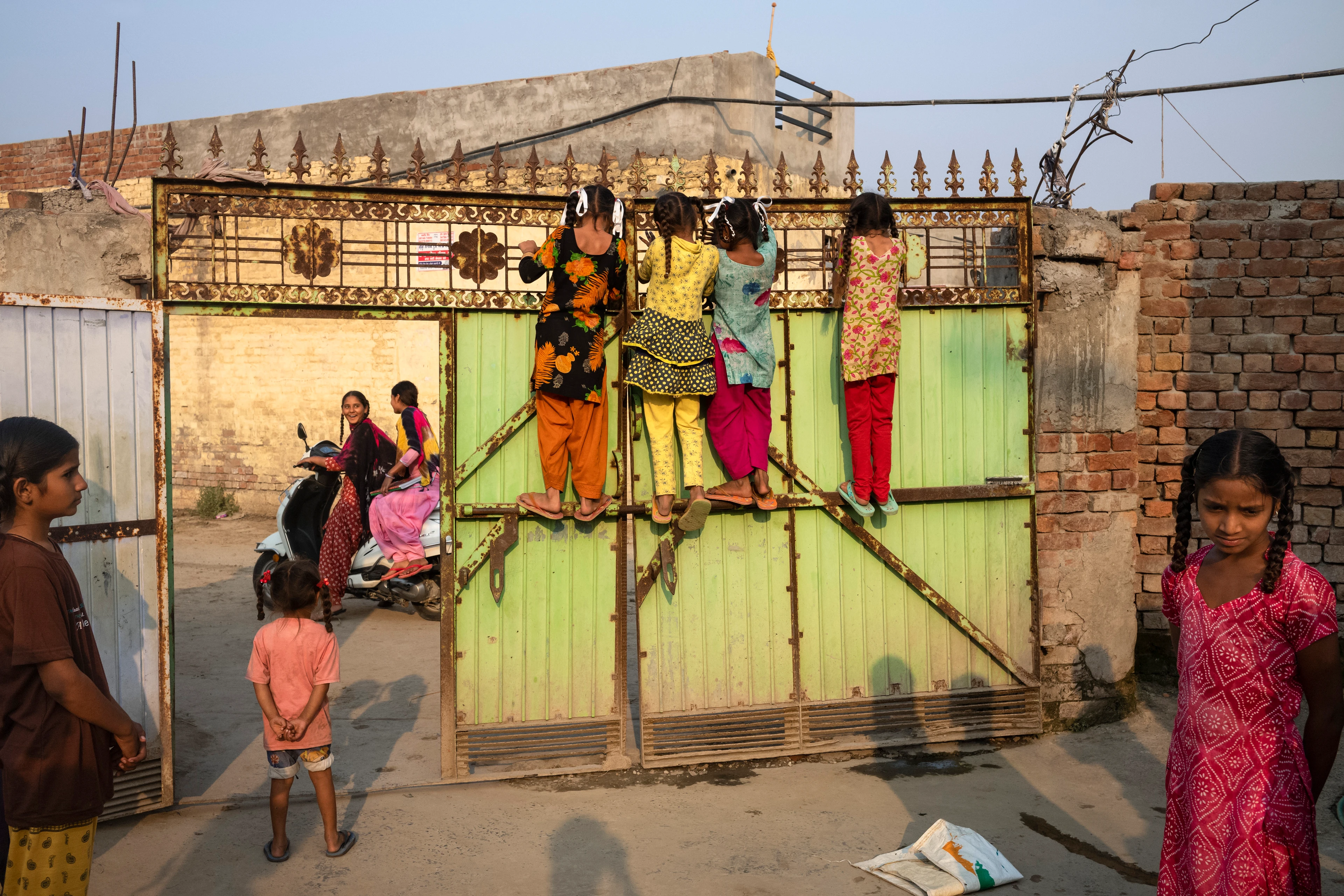
Four girls dressed in Indian clothes stand on a metal gate and look over it at the street, where two cheerful young women sit on a scooter and drive past. Other girls stand in the courtyard and watch.
From the series NOSOTRAS, Punjab, India 2019, Graciela Magnoni
© Graciela Magnoni
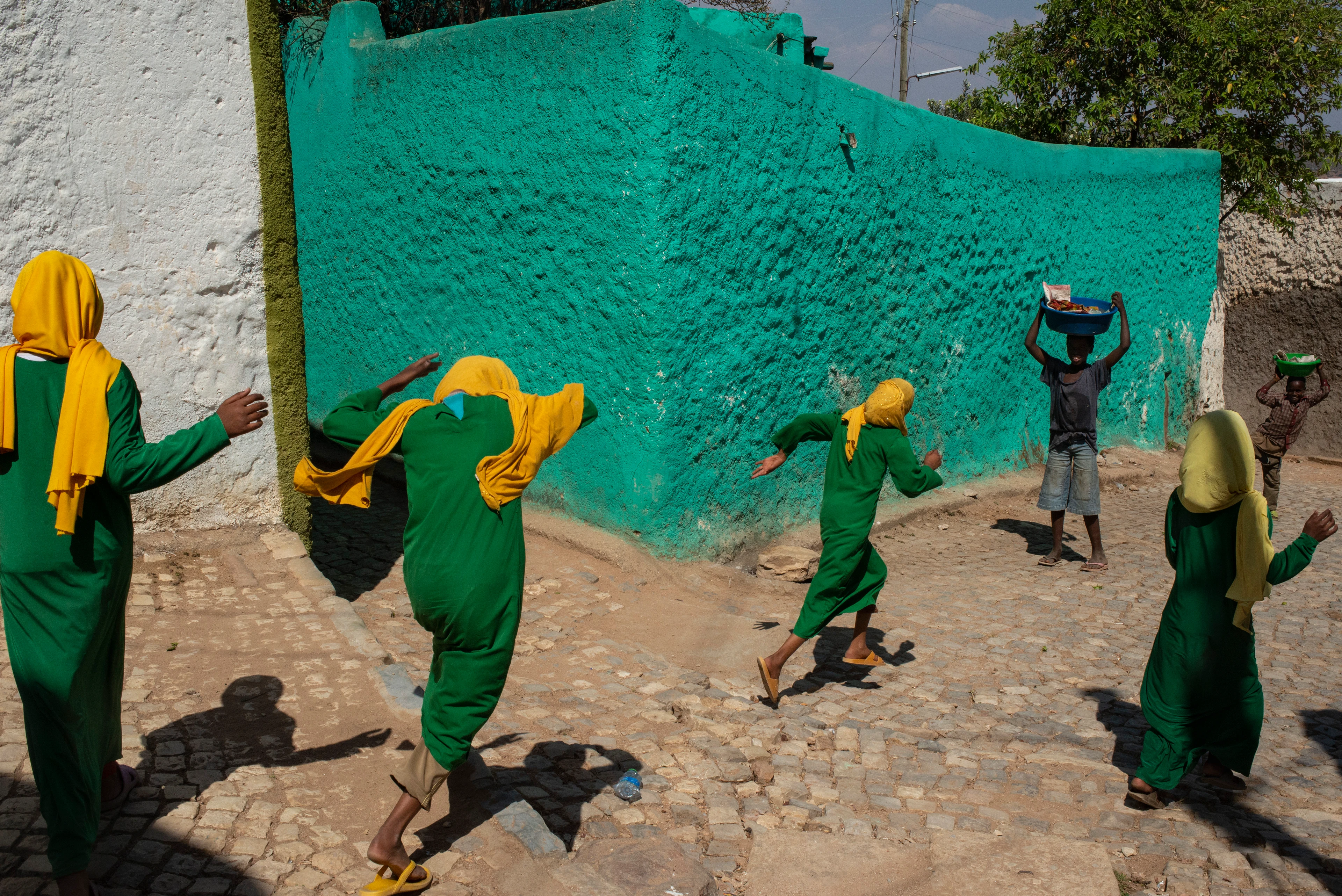
A group of Black girls wearing green tunics and yellow headscarves run along a cobbled path in front of a turquoise wall, playing with two Black boys.
From the series NOSOTRAS, Harar, Ethipia 2019, Graciela Magnoni
© Graciela Magnoni
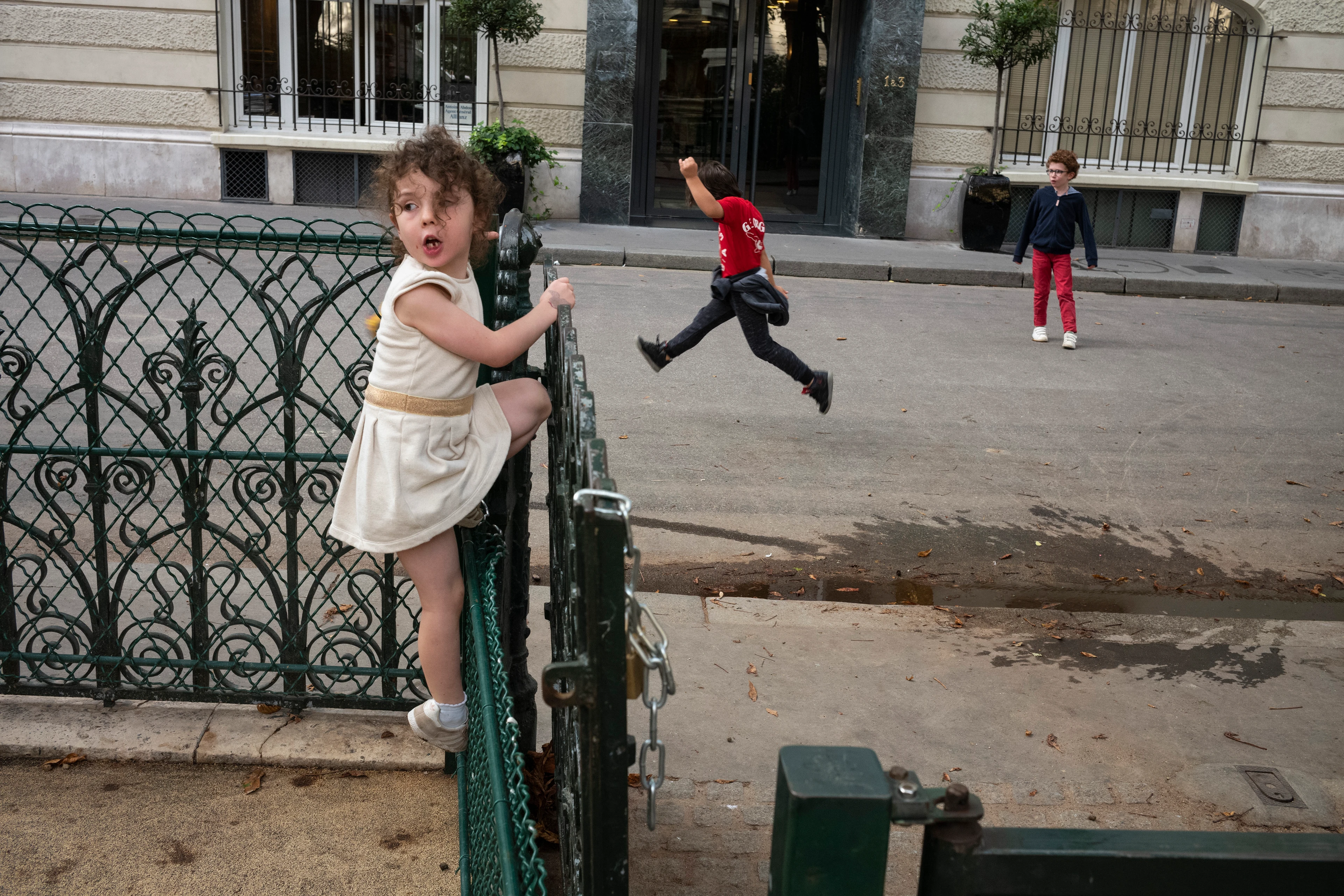
A girl wearing a light-coloured summer dress climbs up a metal fence, looking cheeky, while two other children run and jump around in the street behind her.
From the series NOSOTRAS, Paris, France 2019, Graciela Magnoni
© Graciela Magnoni
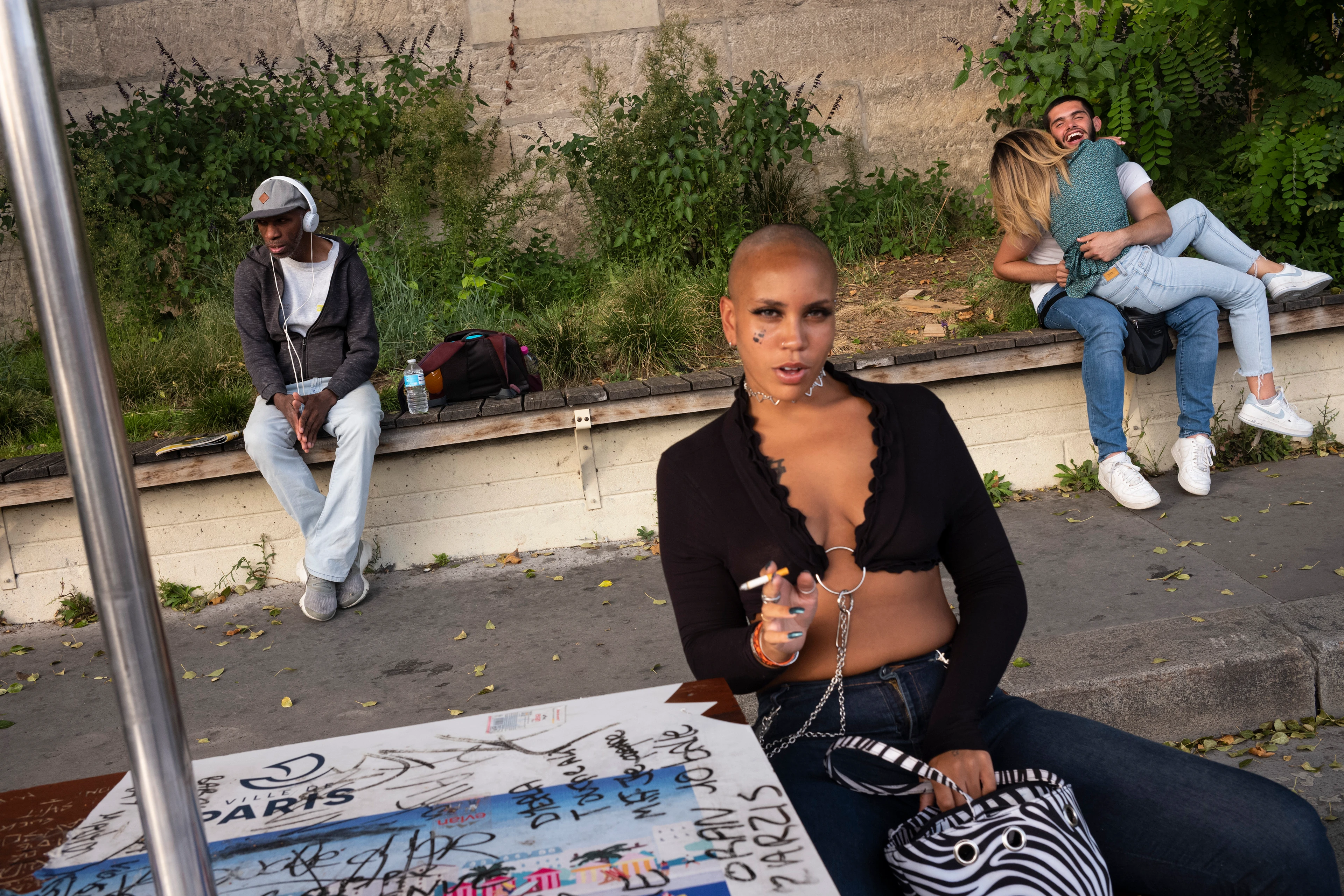
A woman with a shaved head sits confidently at a graffiti-covered table, smoking and looking at the camera. In the background, a couple hug tightly on a bench, while a boy with headphones sits alone nearby.
From the series NOSOTRAS, Paris, France 2019, Graciela Magnoni
© Graciela Magnoni
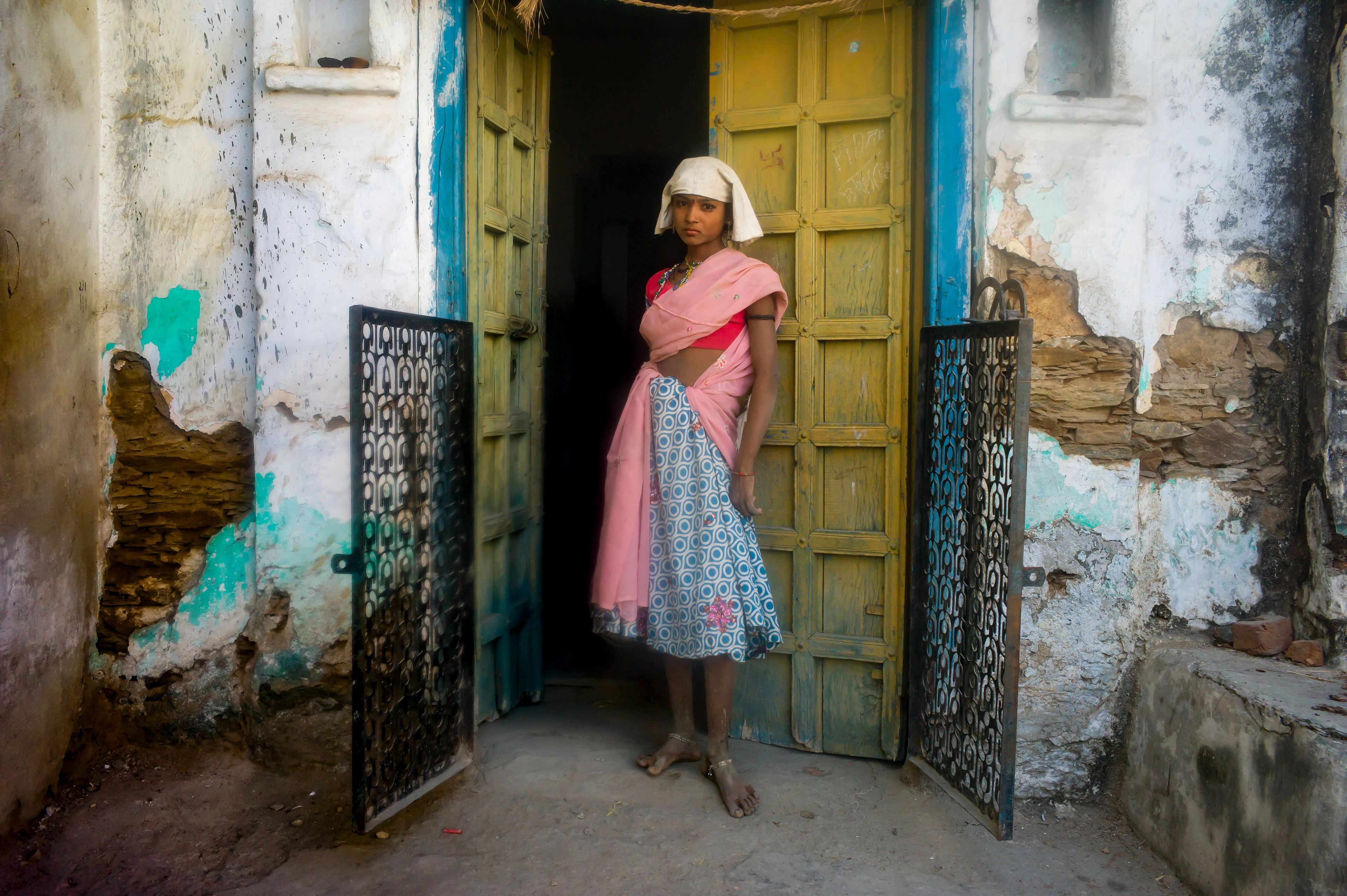
A young woman with a dark complexion, wearing traditionally colourful clothes, stands barefoot in an open doorway with weathered walls. She has a painted dot between her eyes and looks confidently at the camera.
From the series NOSOTRAS, Rajastan, India 2015, Graciela Magnoni
© Graciela Magnoni
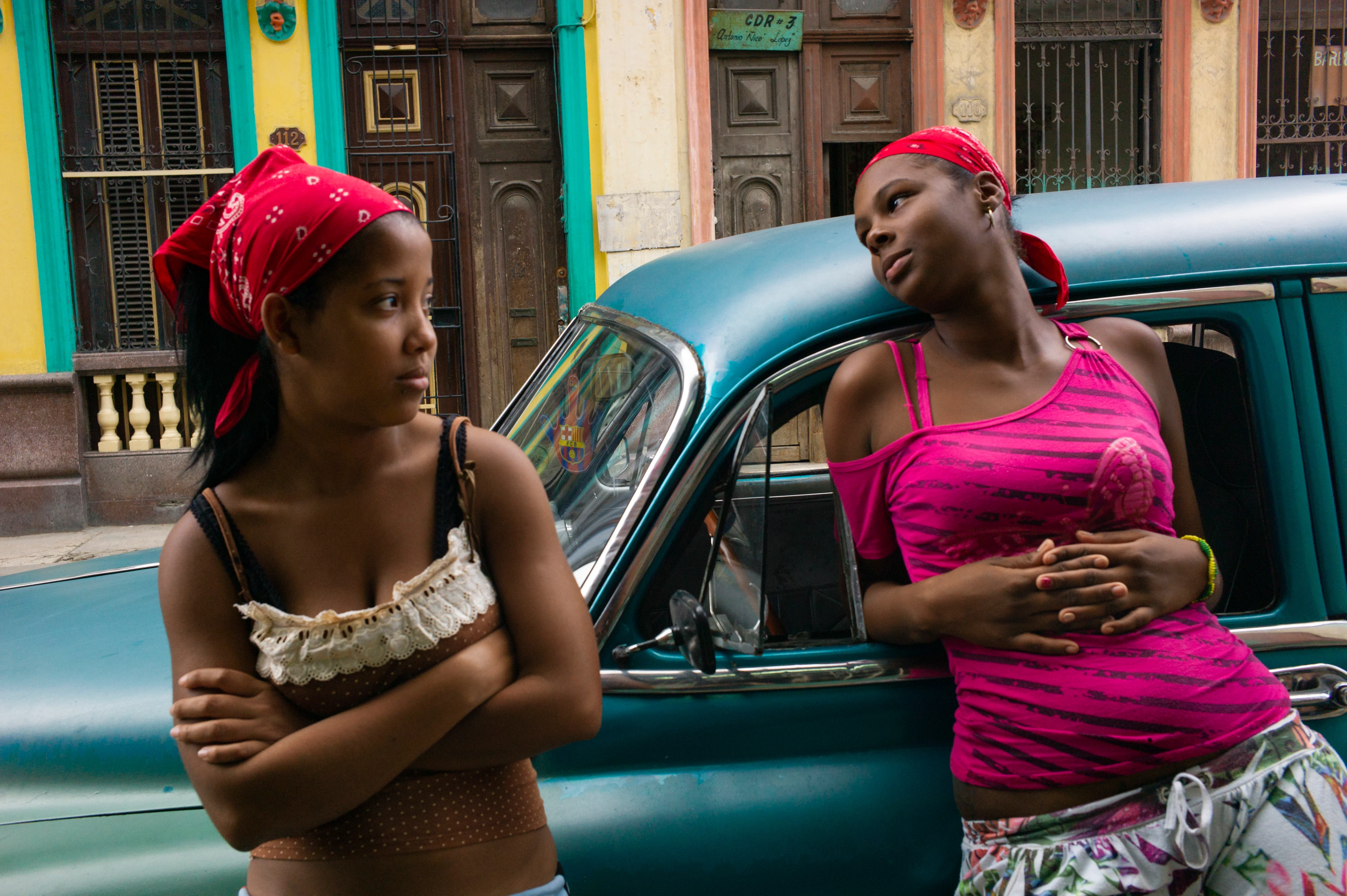
Two women wearing red headscarves lean against a turquoise car. One has her arms crossed and the other has her hands folded on her stomach. They are looking in different directions.
From the series NOSOTRAS, Havana, Cuba 2019, Graciela Magnoni
© Graciela Magnoni
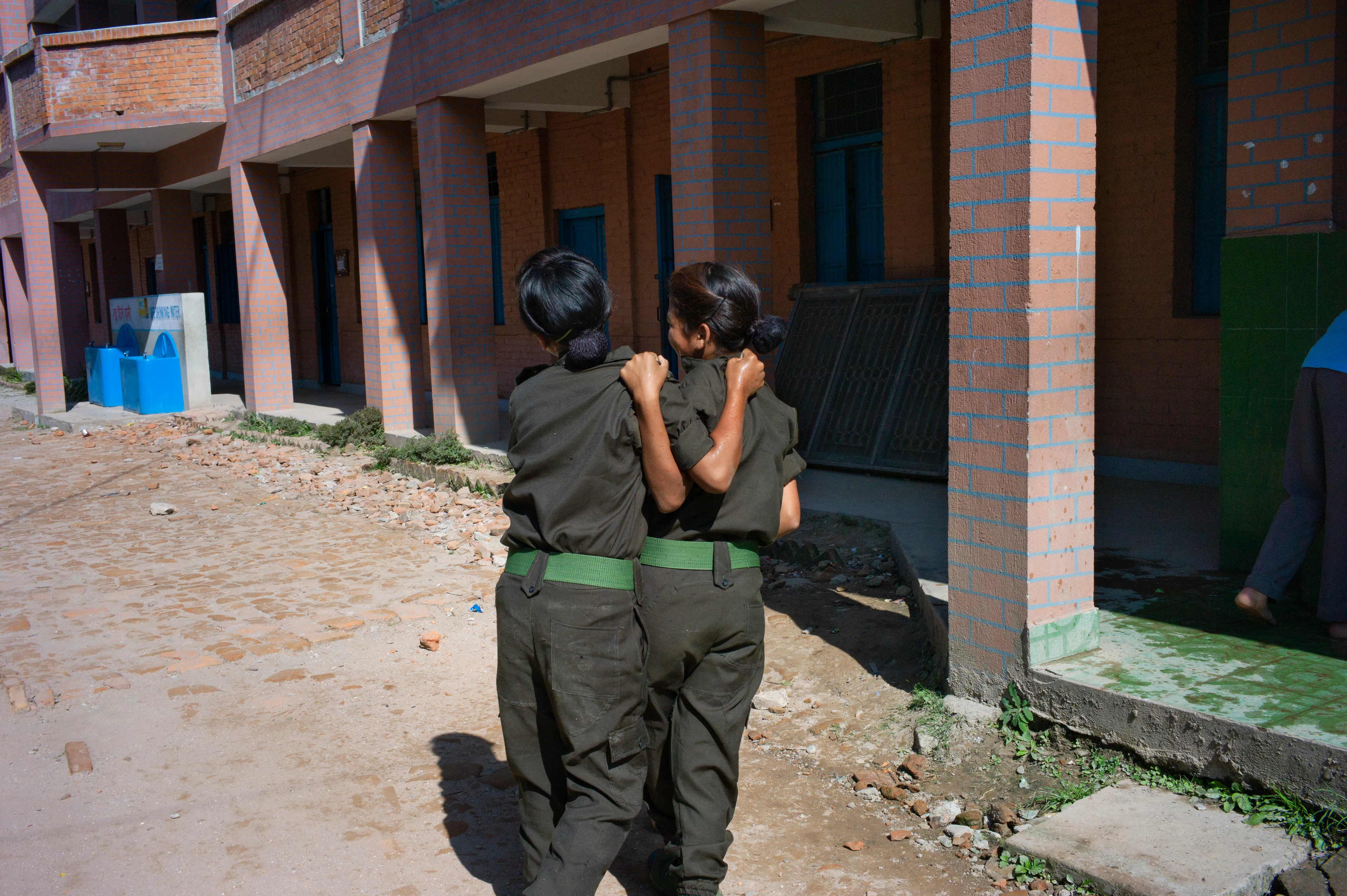
Two girls wearing dark uniforms walk with their arms round each other across a cobbled courtyard between buildings.
From the series NOSOTRAS, Kathmandu, Nepal 2014, Graciela Magnoni
© Graciela Magnoni
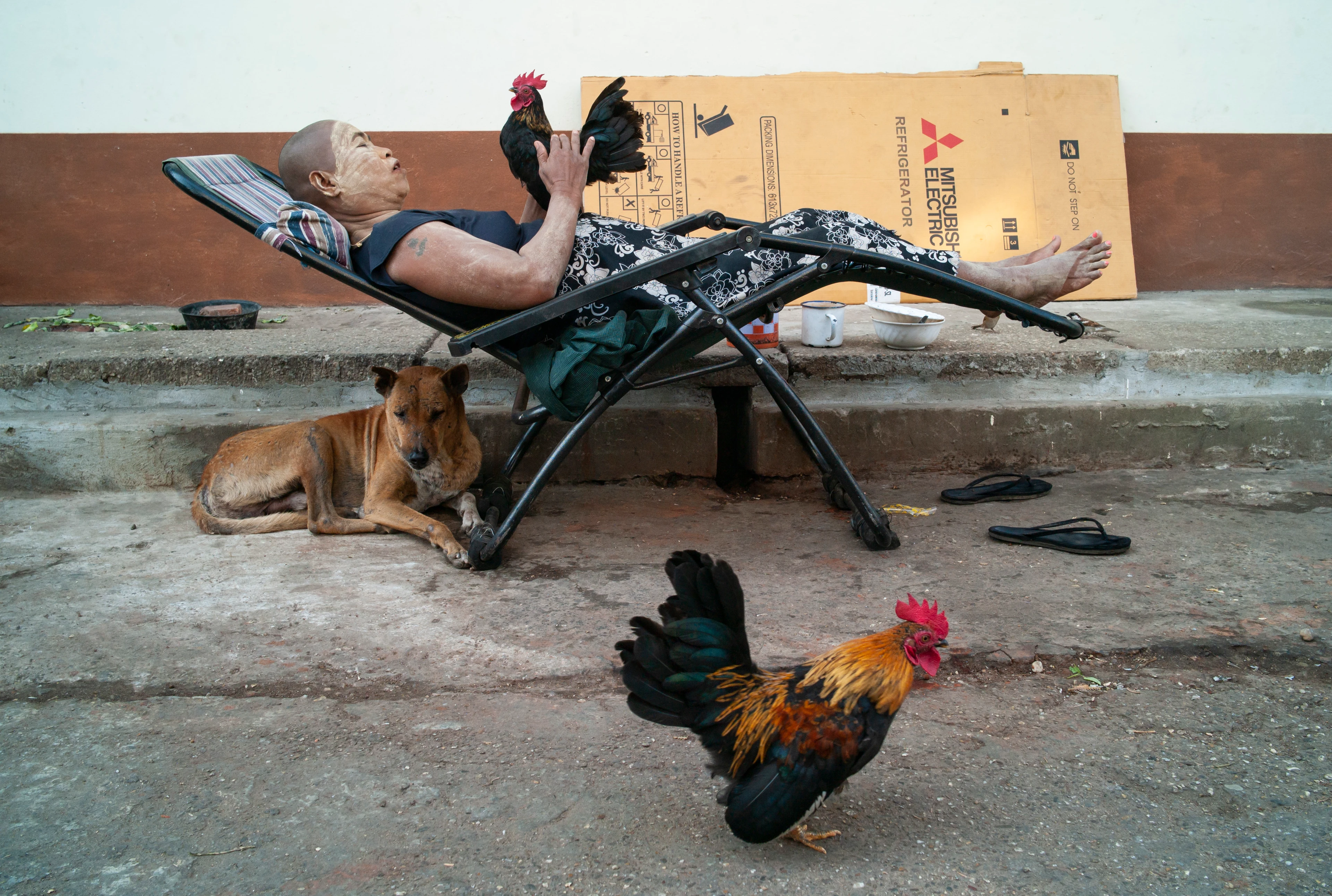
An Asian woman lies in a deckchair in a barren setting, her skin covered in white dust. She holds a rooster in her hands while a dog lies beneath her and another rooster runs across the floor.
From the series NOSOTRAS, Yangon, Myanmar 2013, Graciela Magnoni
© Graciela Magnoni
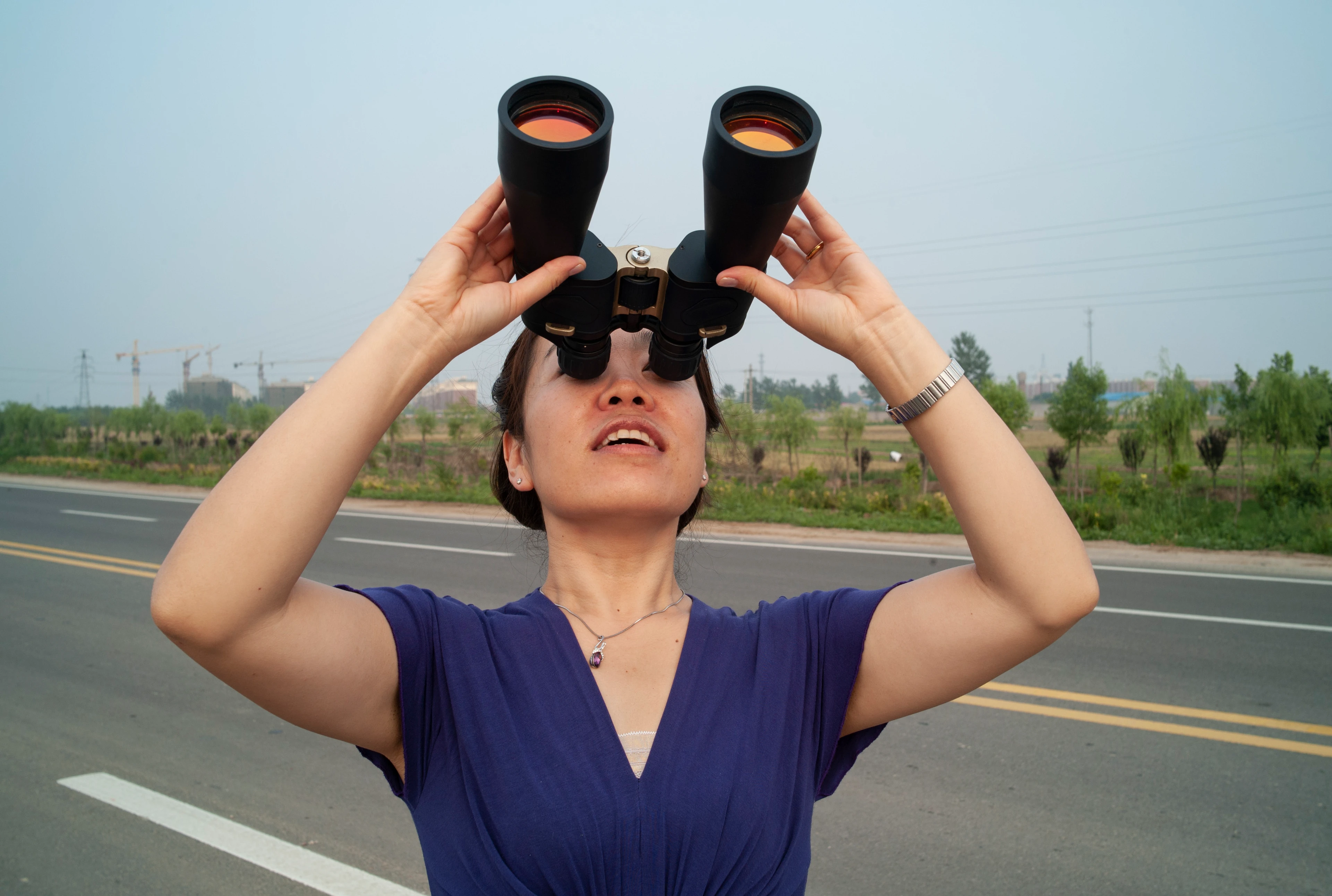
An Asian woman stands on a country highway, holding a large pair of binoculars to her eyes, smiling as she looks up at the sky.
From the series NOSOTRAS, Anguo, China 2013, Graciela Magnoni
© Graciela Magnoni
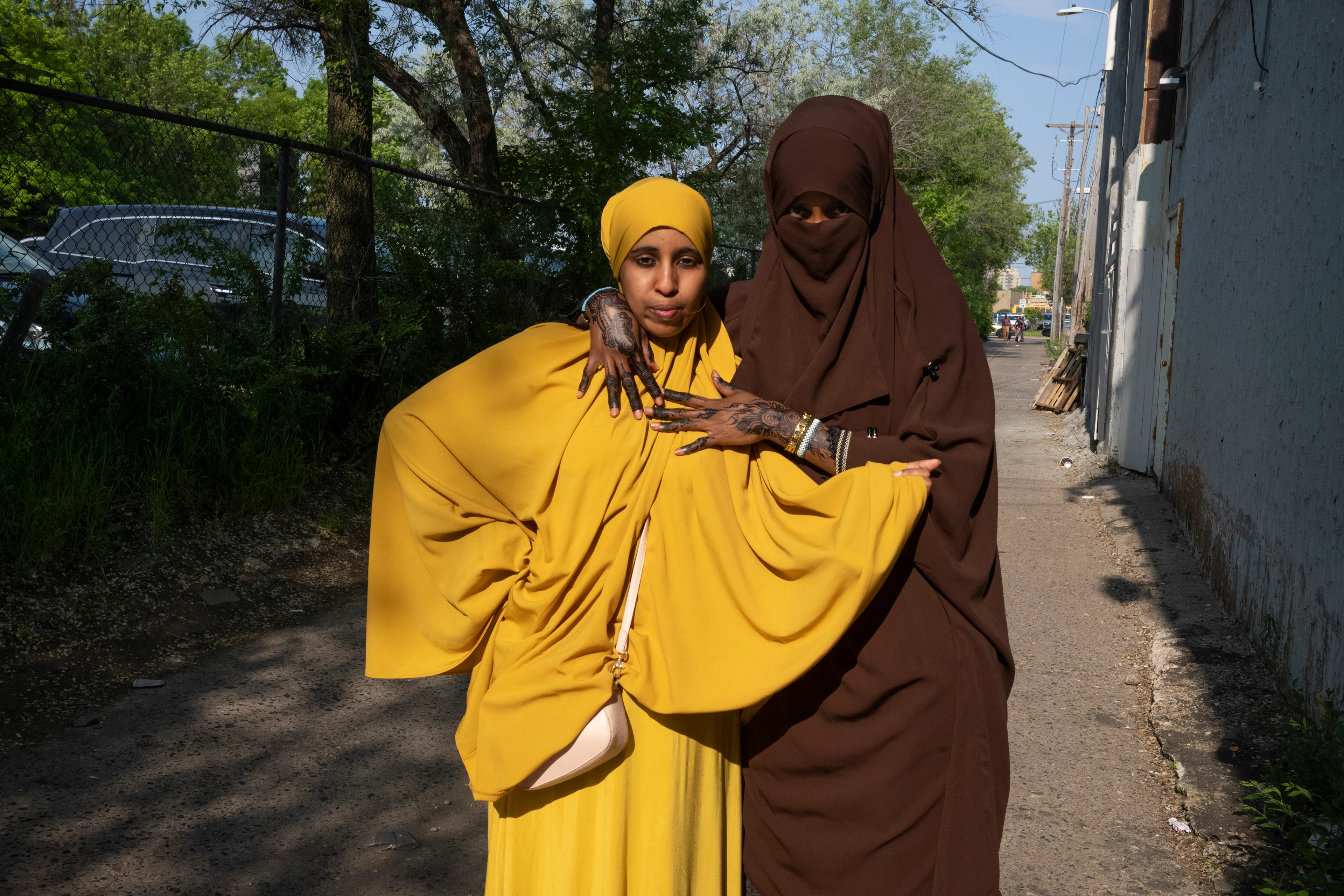
Two women stand close together in an alleyway: one wears a yellow hijab, while the other wears a brown burqa.
From the series NOSOTRAS, Minneapolis, USA 2019, Graciela Magnoni
© Graciela Magnoni
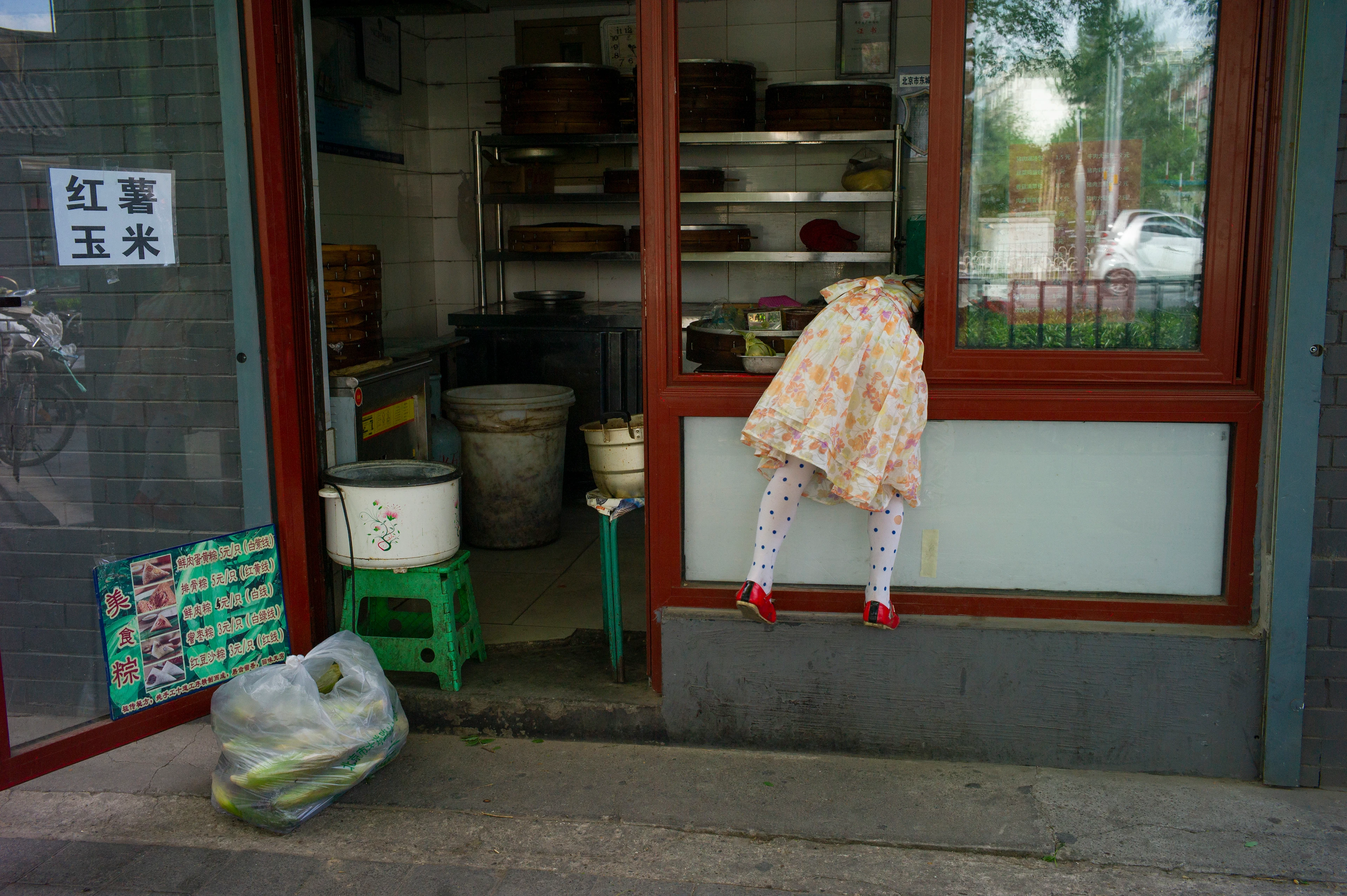
A child climbs through the open window of a small Chinese restaurant kitchen. The door next to it is open, with a bag of vegetables lying in front of the entrance.
From the series NOSOTRAS, Beijing, China 2015, Graciela Magnoni
© Graciela Magnoni
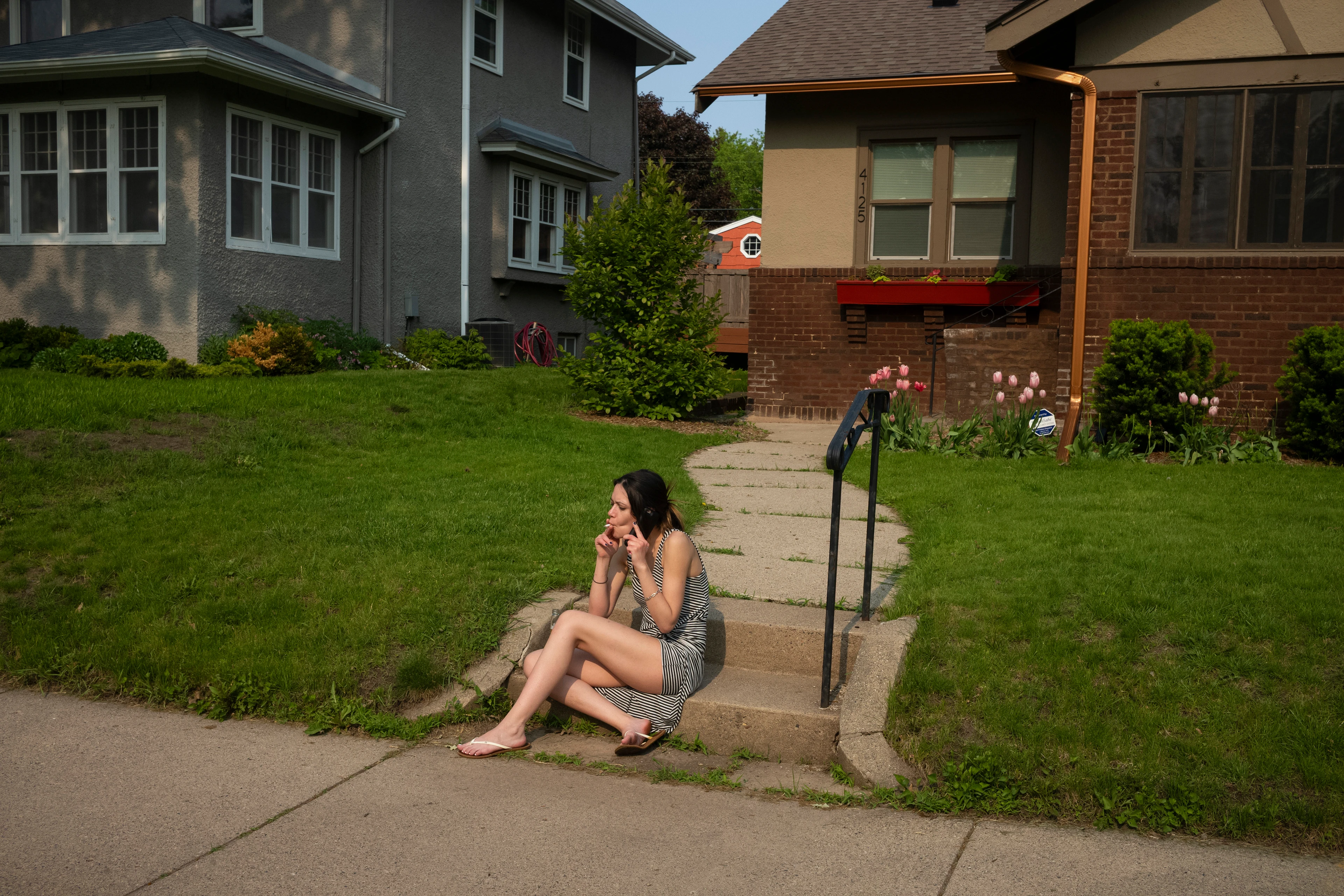
A woman wearing flipflops sits on the outside steps of a house, holding a phone to her ear and looking at the pavement.
From the series NOSOTRAS, Minneapolis, USA 2019, Graciela Magnoni
© Graciela Magnoni
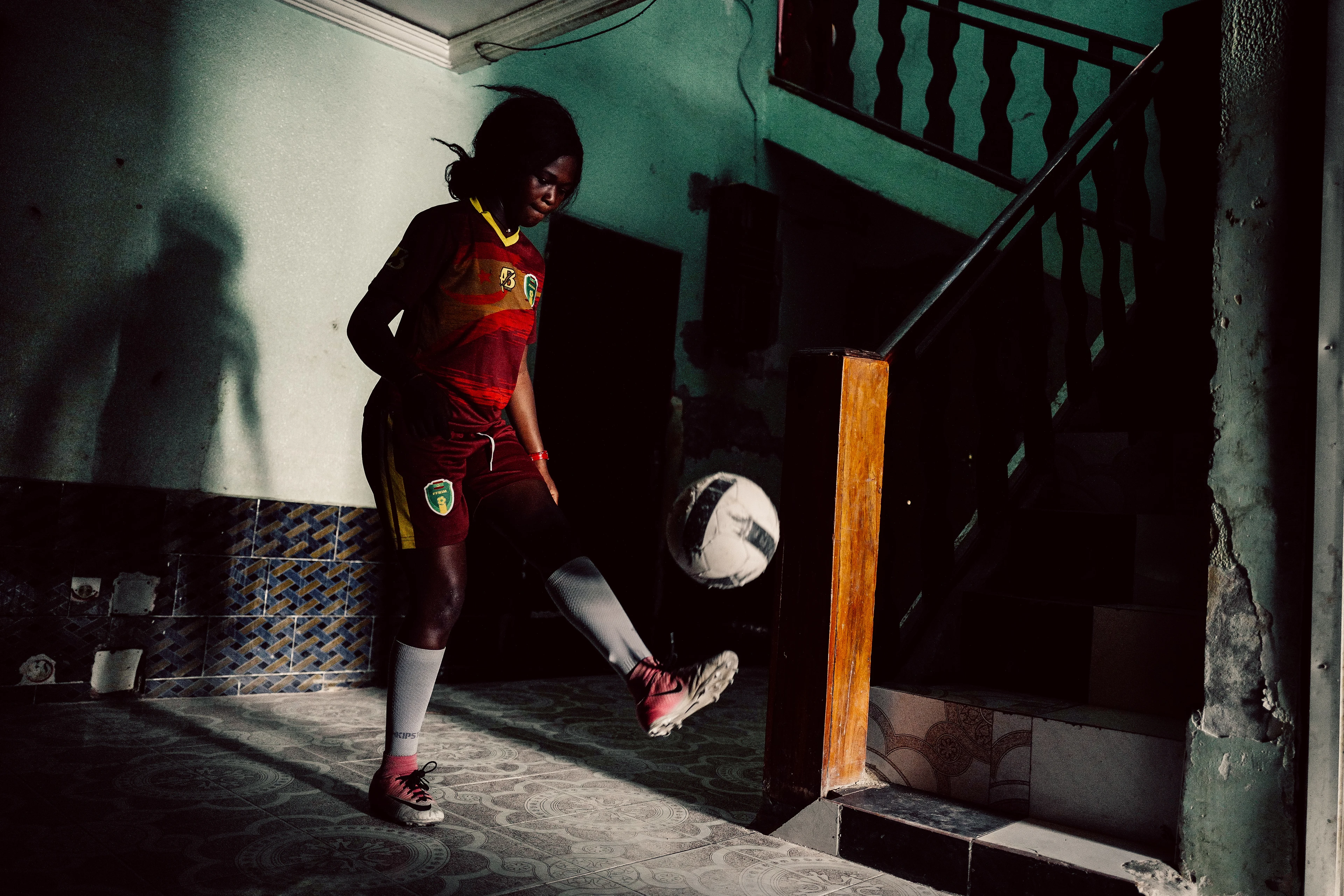
A woman wearing a full football kit plays with a ball in a stairwell, kicking it into the air with her foot, while her shadow is projected onto the wall.
From the series Mauritania Soccer Pioneers 2019, Lucas Barioulet
© Lucas Barioulet
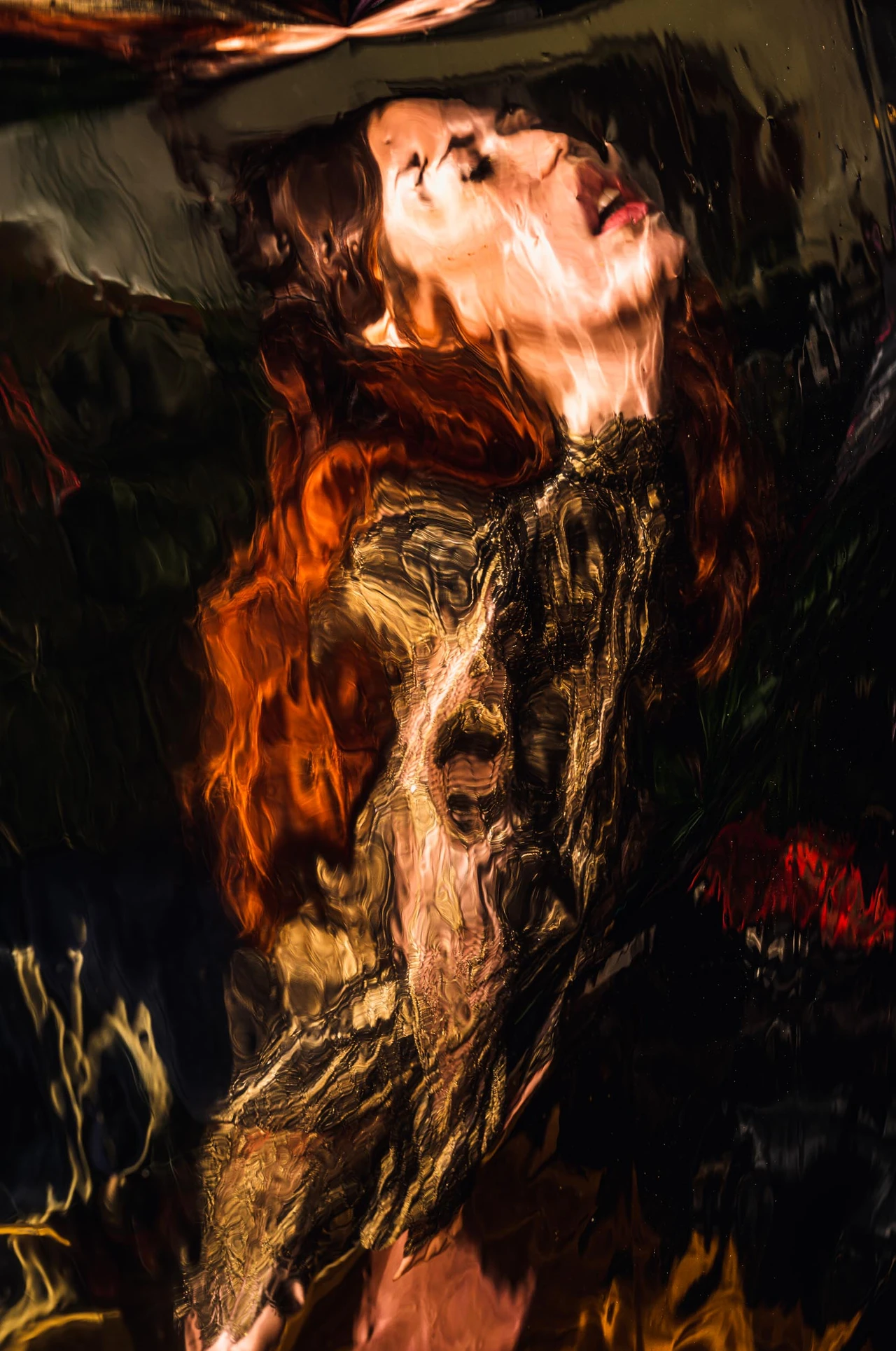
A highly distorted, abstract-looking portrait of a woman with her head tilted back and auburn hair fills the picture, as if seen through an unevenly reflective or fluid surface.
MYLAR 2017, Bil Brown
© Bil Brown
1/17
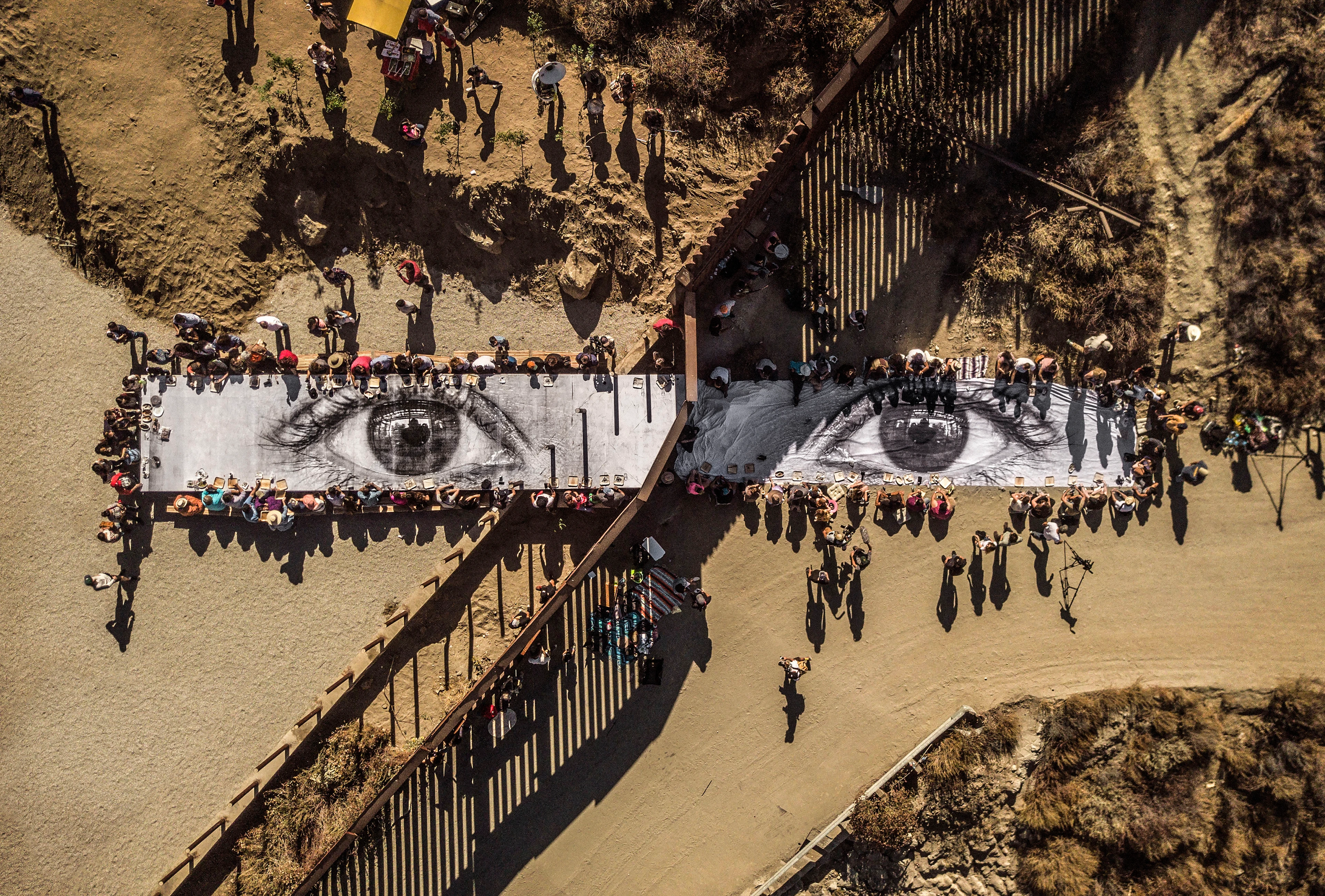
Bird’s eye view: A large group of people sit and eat together at a table and on a blanket. Through a border fence, they form a common image of two eyes looking up at the sky.
Migrants, Mayra, Picnic across the border, Tecate, Mexico–U.S.A. 2017, JR
© JR

Crossing Borders

The 2010s are characterised by global migration movements – political upheaval, climate change and economic uncertainty have set millions of people in motion. Images of flight dominate the news. JR is one of the first artists to address this topic on a large scale, giving it great media coverage and making it both visible and tangible. In doing so, he introduces a new perspective: photography not only shows arrival or origin, but also the common denominator in the space in between, which connects people across borders: humanity.
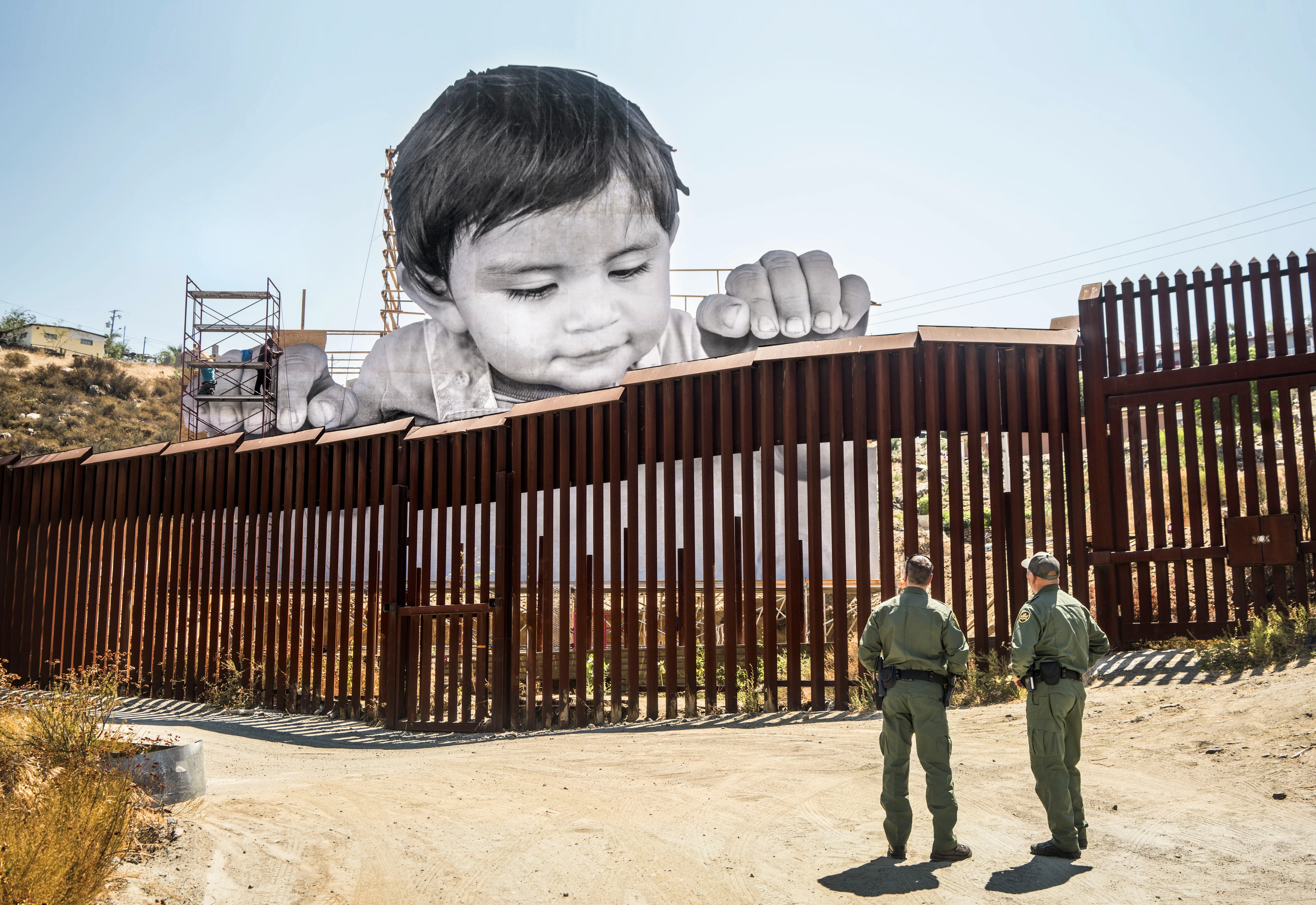
A large-format image of a child looking over a border fence and placing their hands on it stretches across the top of the fence, while two uniformed officers stand in front of it.
GIANTS, Kikito and the Border Patrol, Tecate, Mexico–U.S.A. 2017, JR
© JR

Mexico–USA


JR encapsulates the entire theme of border politics in the image of a child looking over the fence. Next to the image, JR organises a communal meal at a long table, visually extending it behind the border with a blanket to create a single image from above. In the unifying motif, the pair of eyes turn their gaze to the sky. Both installations shift the perspective away from the wall and towards the question of who suffers most from it.
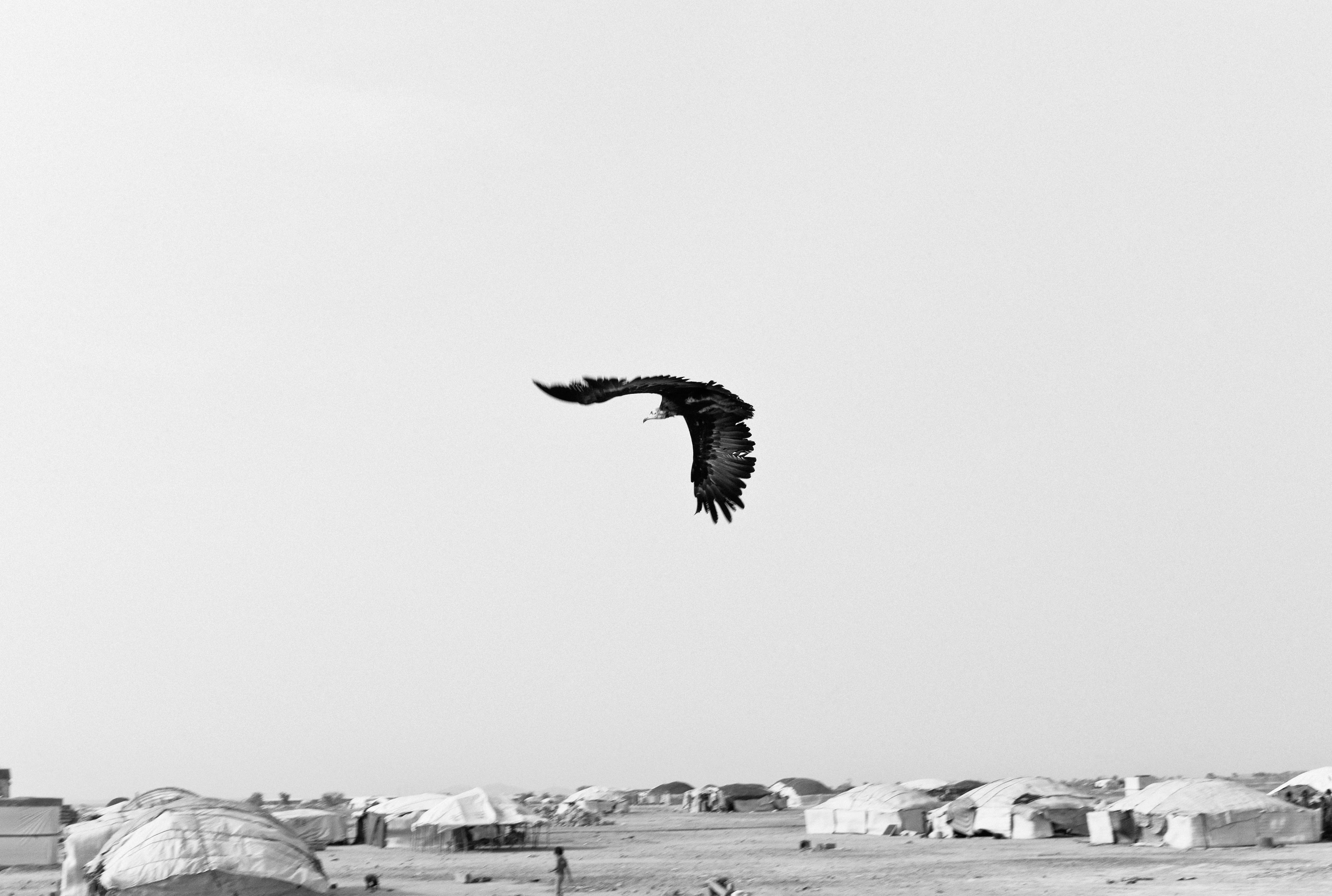

A large bird of prey flies over a vast cluster of tents and refugee shelters stretching to the horizon.
A Tale of Heat and Eclypse: Overview of Mentao refugee camp, Djibo, Burkina Faso 2013, Giulio Rimondi
© Giulio Rimondi

Burkina Faso


Giulio Rimondi photographs the Mentao camp, where people seek refuge from the unrest in Mali. They are waiting, living together and planning for the future, despite not knowing where they will end up. Here, migration does not appear as a moment of flight, but as an ongoing part of everyday life.
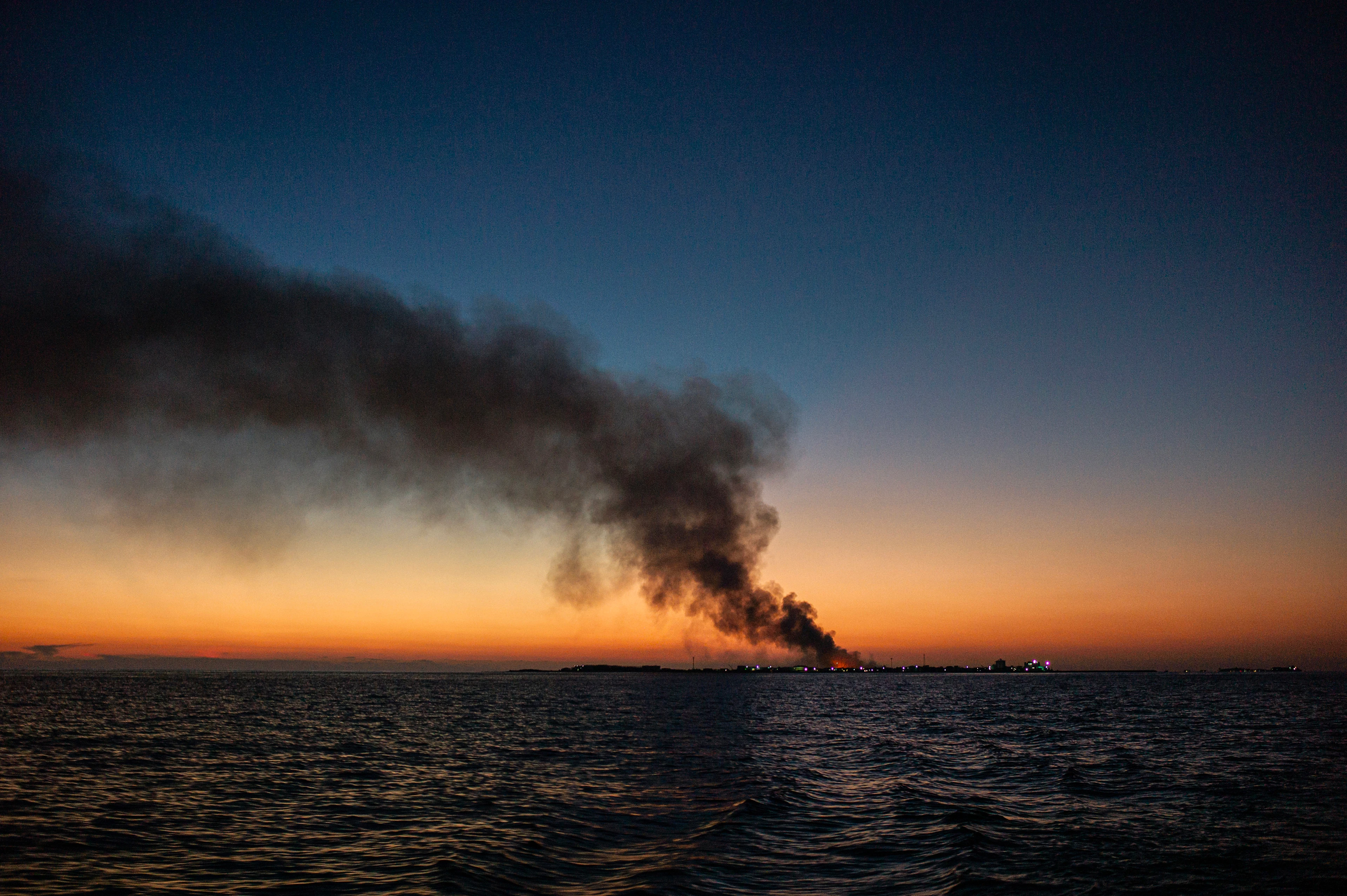

Thick, black smoke rises from a point on the horizon into the sunset sky.
Thilafushi at sunset, also known as “garbage island,” where waste from all Maldivian islands is burned. 2013, Philipp Spalek
© Philipp Spalek

Maldives


False promises and dashed hopes. In his reportage, Maldives – All Inclusive, Philipp Spalek reveals a different side to the picture-postcard country, showing migrants working in isolation and in the shadows on the beaches, far from the holiday paradise.
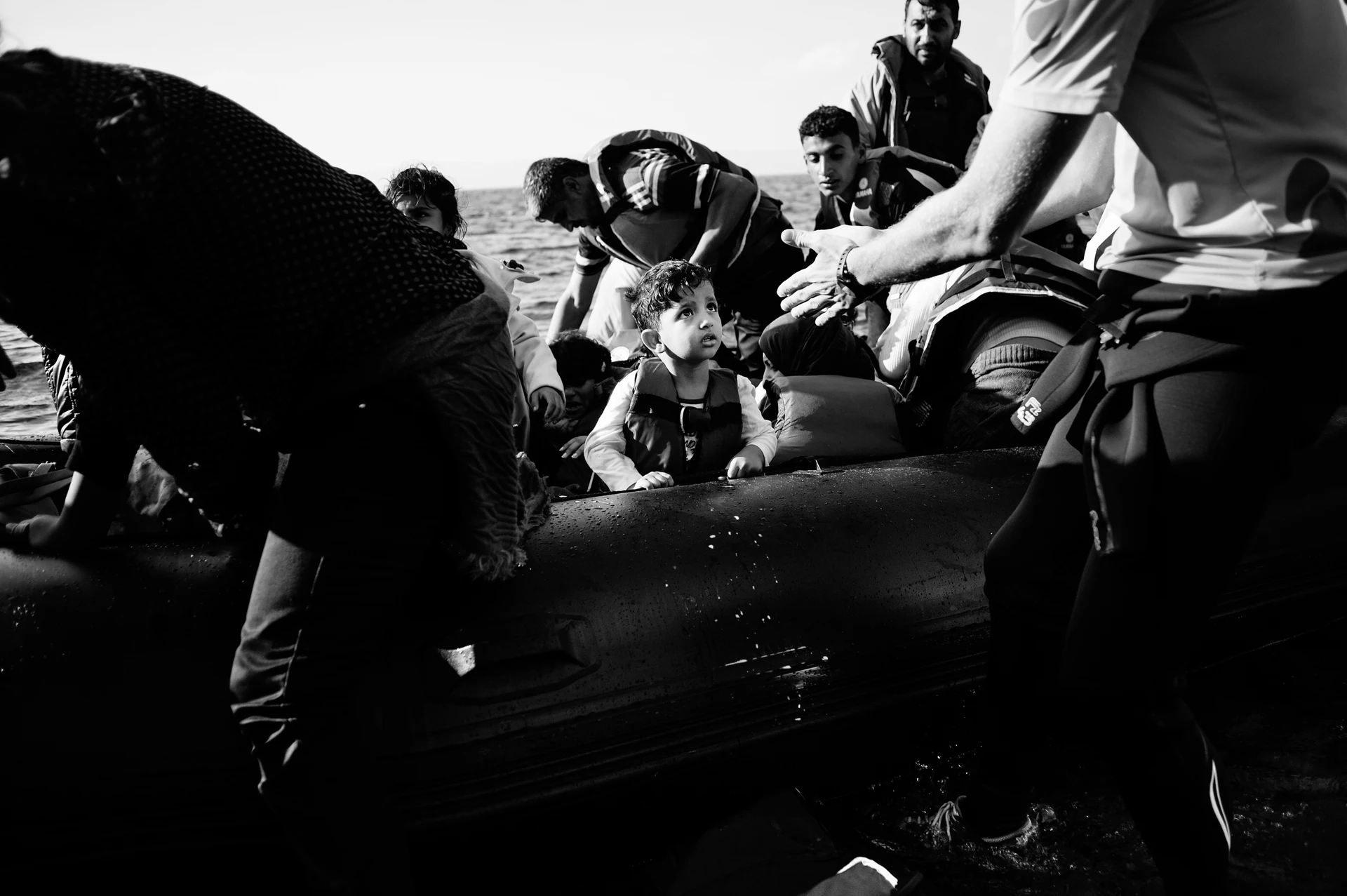

Several people in shallow water work together to pull an overcrowded rubber dinghy to the shore. In the centre of the picture, a small boy looks wide-eyed in the direction of a helper.
From the series Lesbos, Refugees arrive on the Greek island of Lesbos from Turkey 2015, Kai Löffelbein
© Kai Löffelbein

Greece


Kai Löffelbein’s photographs of Lesbos capture the transient nature of arrival: weary individuals, makeshift camps and discarded items strewn across the beach. They are traces of the long and dangerous journey towards hope, which is far from over.
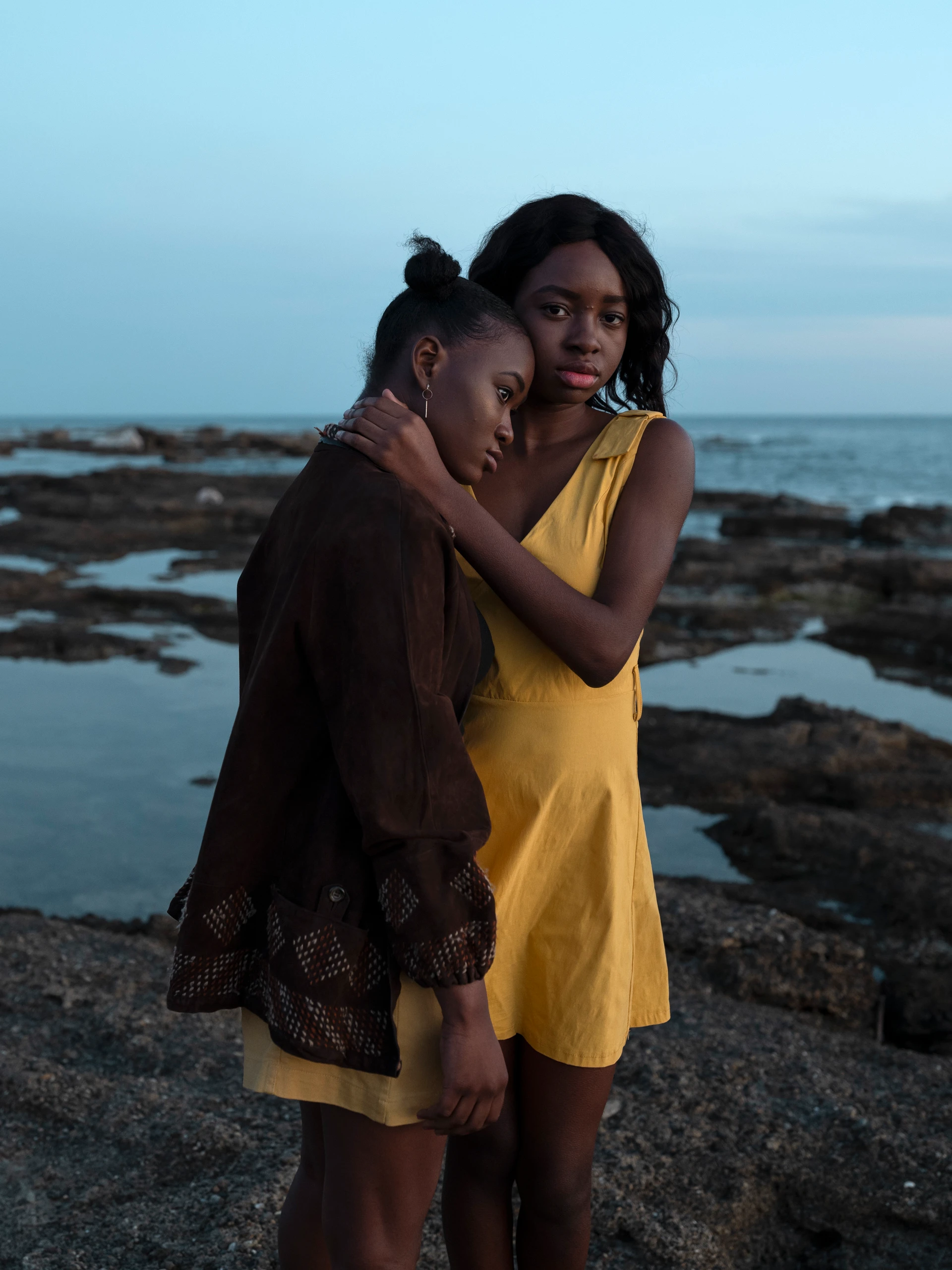

Two young Black women stand close together on a rocky stretch of coastline. One of them is wearing a yellow dress and is embracing the other woman wearing a brown coat over a yellow dress. She is looking forwards while the other rests her head on the first woman’s shoulder.
Angel and Gaia, Livorno, Italy 2020, Alisa Martynova
© Alisa Martynova

Italy


A symbolic new beginning: Alisa Martynova portrays two young women in Livorno who were born far apart yet are connected. A moment of belonging, away from questions of origin and future.


I like the moments that connect us and finding points of connection.
Sarah M. Lee
Portrait of Sarah M. Lee

In the Middle of Passing

Sarah M. Lee proves that even fleeting encounters can create a feeling of closeness. In Tender are the Nighthawks, she portrays Londoners suspended between night and day. There is no voyeurism or staging; just genuine melancholy and humanity. Lee moves with the same flair through many other genres, such as celebrity portraits, event photography and still lifes. She always brings us closer to people in their essence with her clear and intense gaze.
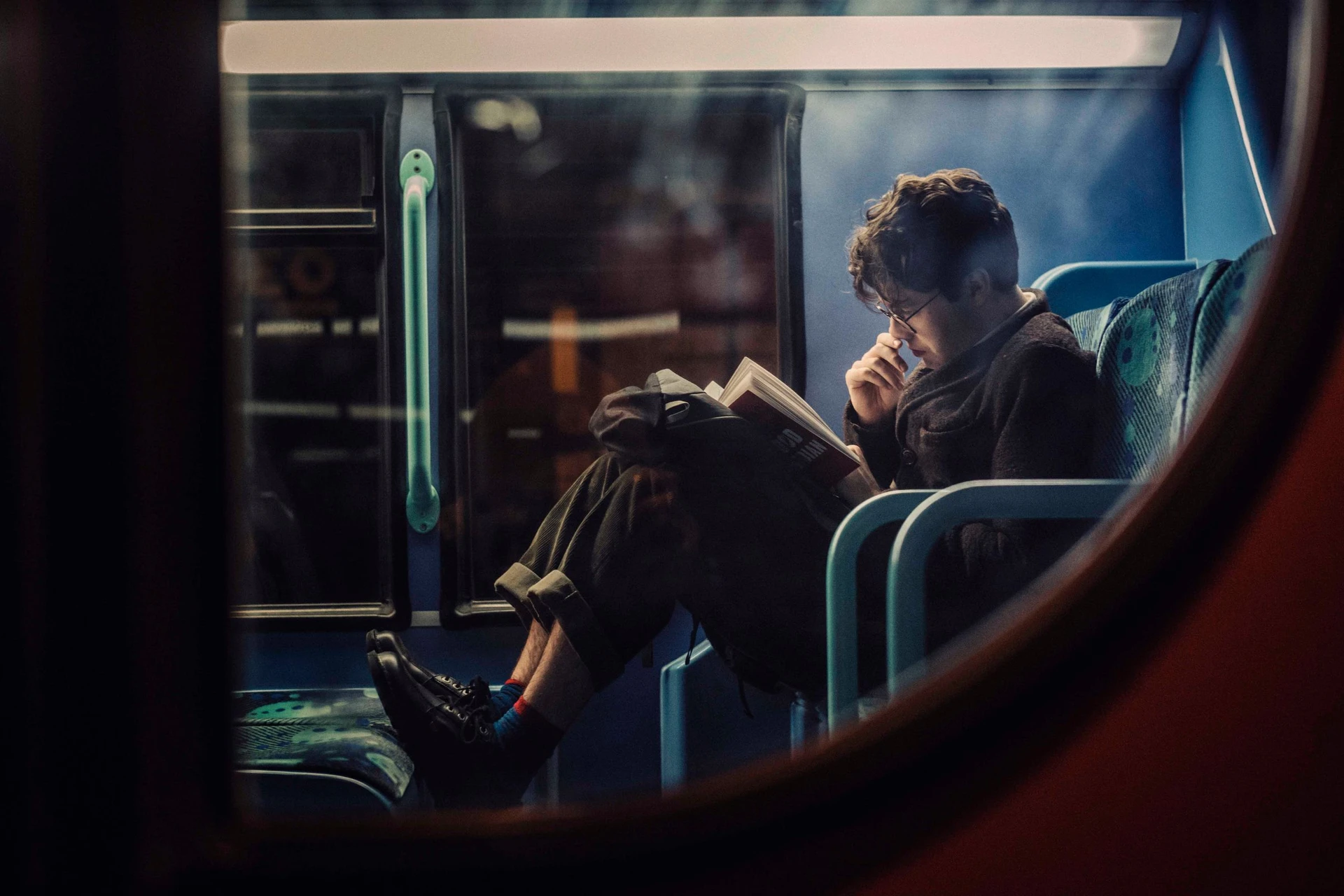
An atmospheric view of a man engrossed in a book with his knees drawn up, as seen through a bus window.
Tender are the Nighthawks

The Power of a New Generation

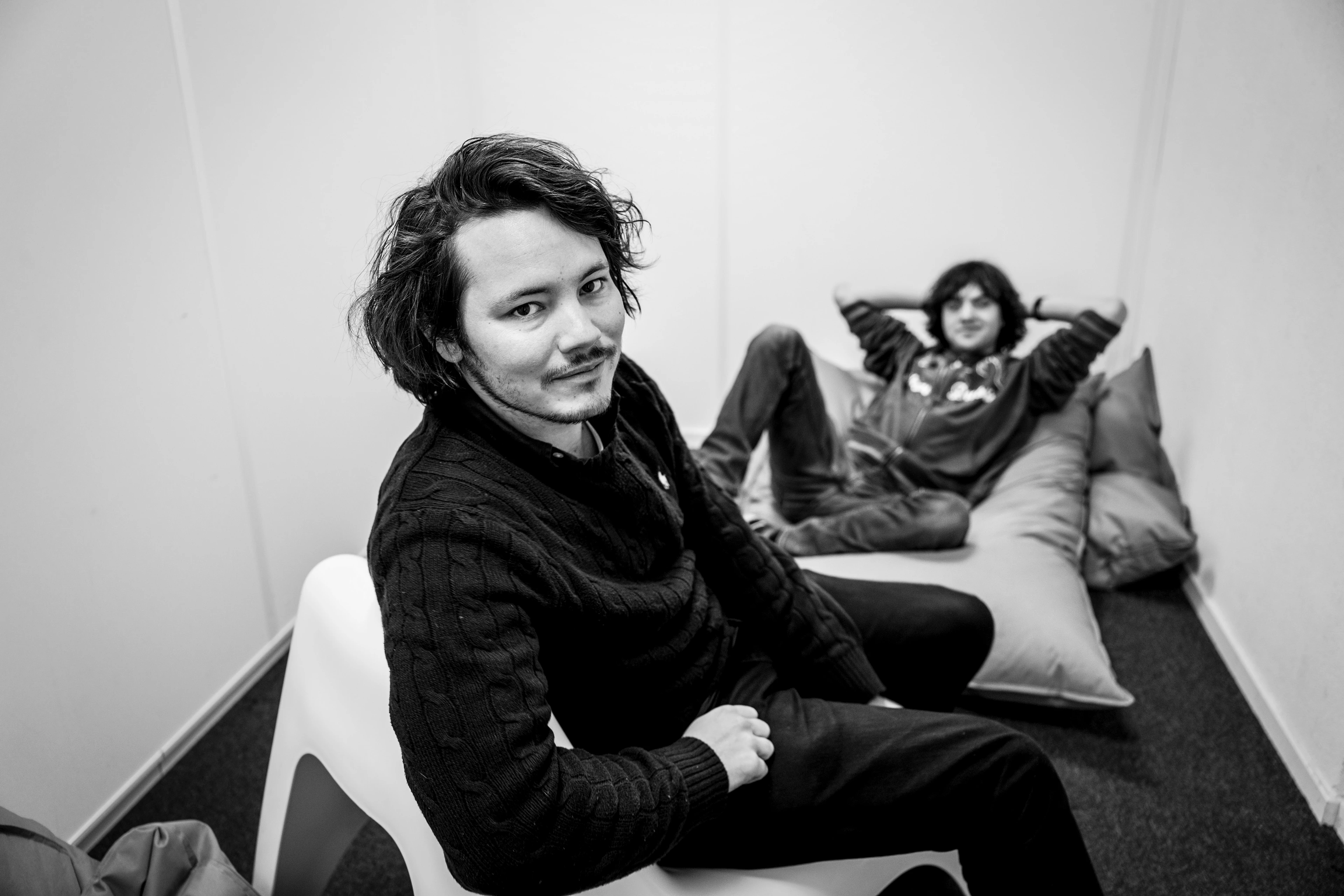
The Ocean Cleanup has developed technologies that have removed over 16 million kilogrammes of plastic waste from rivers and oceans to date! Doug Menuez presents Boyan Slat and his team not as adventurers on the high seas, but as people working with laptops and models and having relaxed conversations. This normality is perhaps even more inspiring than outdated heroic images. After all, projects like this emphasise the positive change that young visionaries can drive forward in the real world. They also lend a certain optimism to the view of the future.
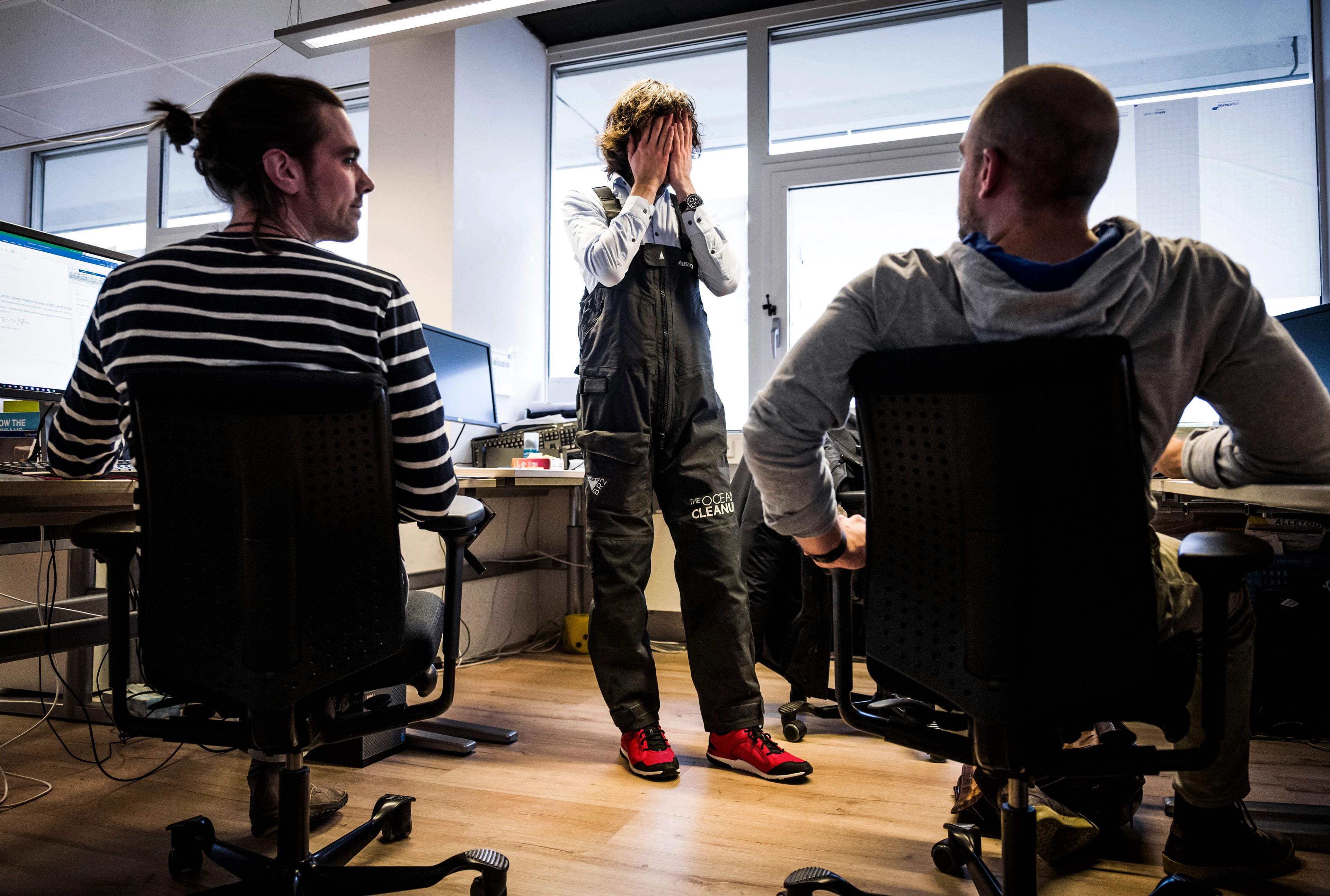
Boyan Slat, wearing black overalls bearing the name of his company, The Ocean Cleanup, stands in the office in front of two colleagues sitting in chairs, covering his face with his hands.
Boyan Slat / The Ocean Cleanup 2018, Doug Menuez
© Doug Menuez
Boyan Slat sits relaxed on a beanbag in a small meeting room while another person sits on a chair in front of him, smiling at the camera.
Boyan Slat / The Ocean Cleanup 2018, Doug Menuez
© Doug Menuez
Portrait of Boyan Slat in the background
Leica Oskar Barnack Award logo

LOBA 2010–19

In Transition

In a decade characterised by self-aggrandisement and constant digital presence, the Leica Oskar Barnack Award is becoming an increasingly important global benchmark for documentary photography. The winners of this award tell the story of real life in transition, depicting empathy, dignity and closeness in an increasingly networked and vulnerable world. Their work counters fast-moving images with calm observation.
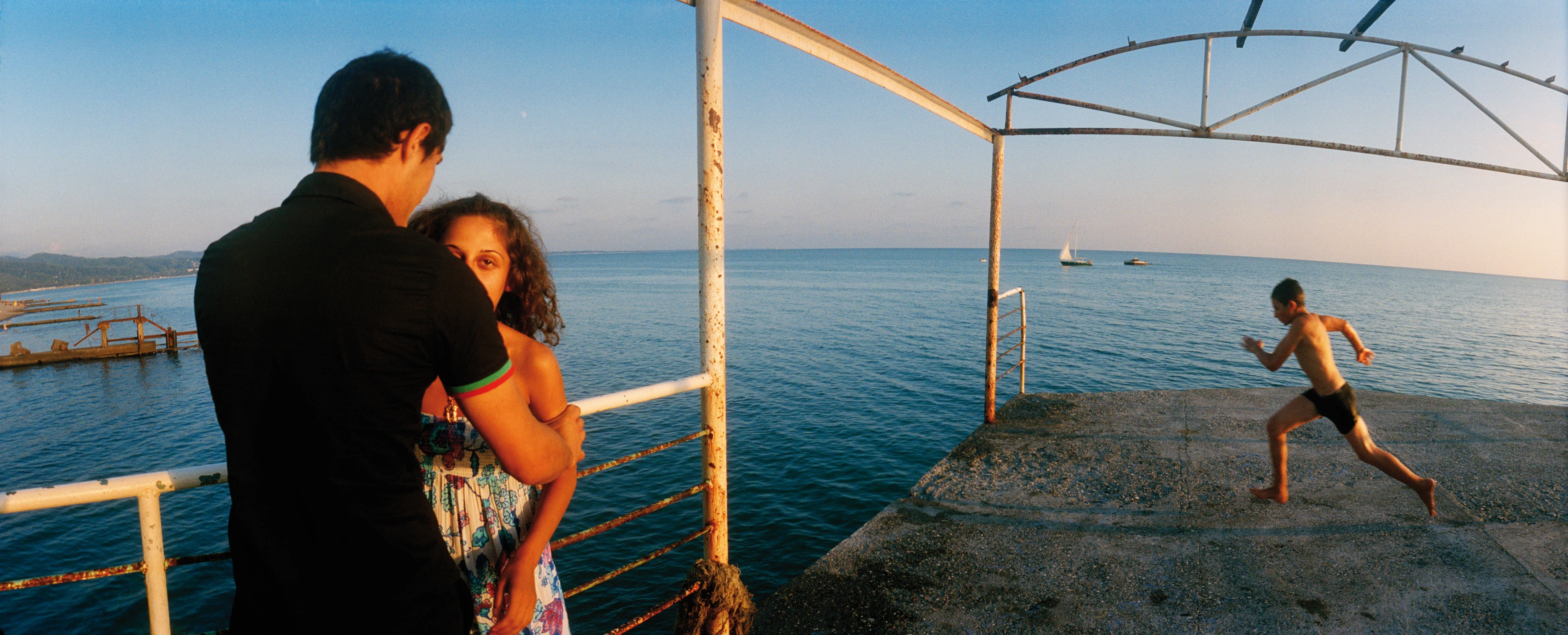
A child runs barefoot across a concrete platform over the sea on which a dilapidated metal railing structure stands. The child is about to jump into the water. In the foreground, a man holds a woman by her arms.
Waiting for the Future – Pictures from Abkhazia 2010, Jens Olof Lasthein

2010


Jens Olof Lasthein

In Waiting for the Future, Lasthein portrays people in Abkhazia, caught between war and stagnation. His panoramas combine vastness with intimacy, showing how uncertain the future can be and how much dignity can be found in waiting.
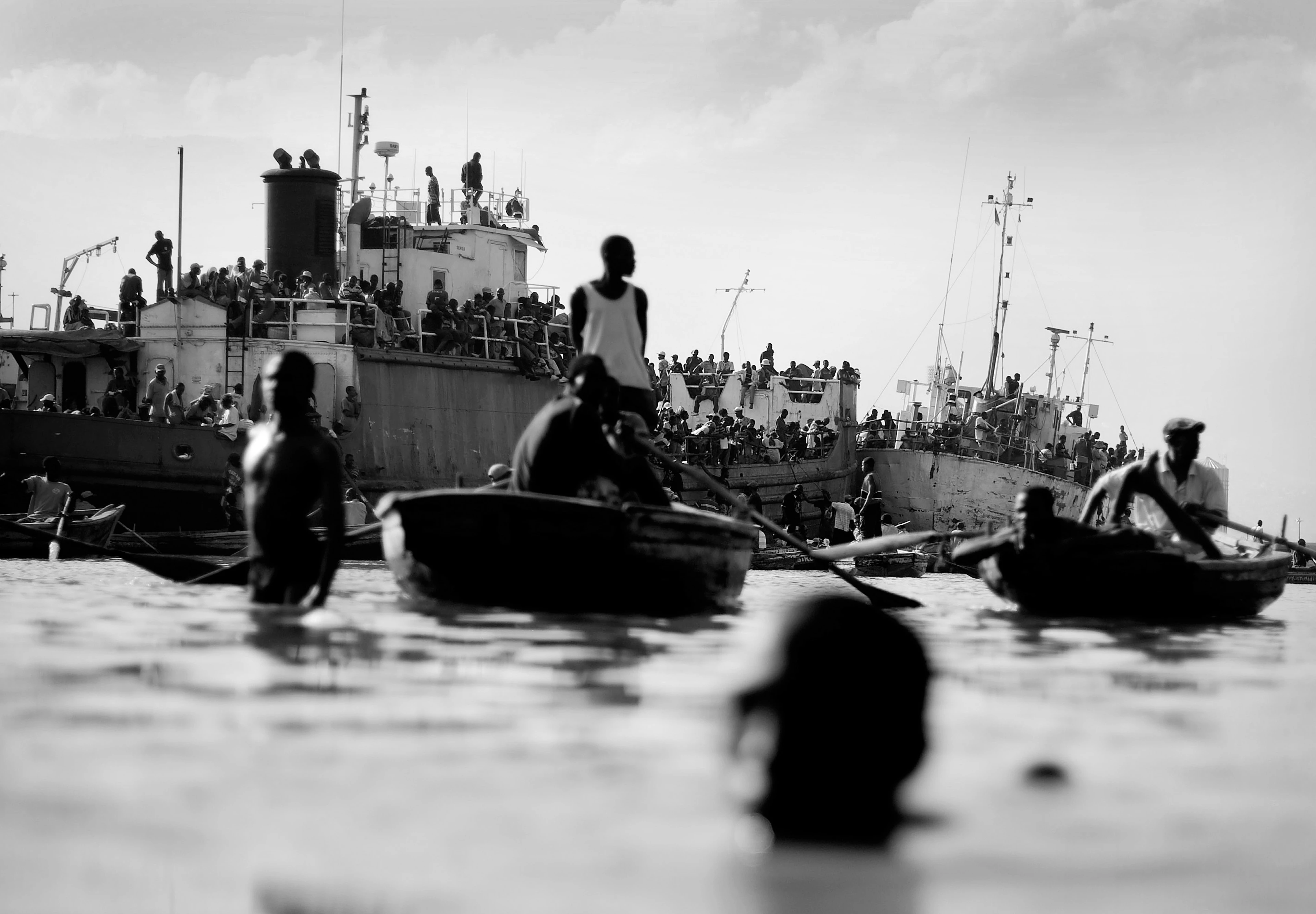

Black-and-white image: Several Black people sit and stand in small boats or swim close to a large ship in the background, where many more people are crowded on the deck.
Haiti Aftermath 2011, Jan Grarup

2011


Jan Grarup

In Haiti – Aftermath, Grarup documents life after the 2010 earthquake, showing suffering, survival and solidarity in deep black and white. His images convey both pain and dignity. His reportage makes the almost unbearable tangible.
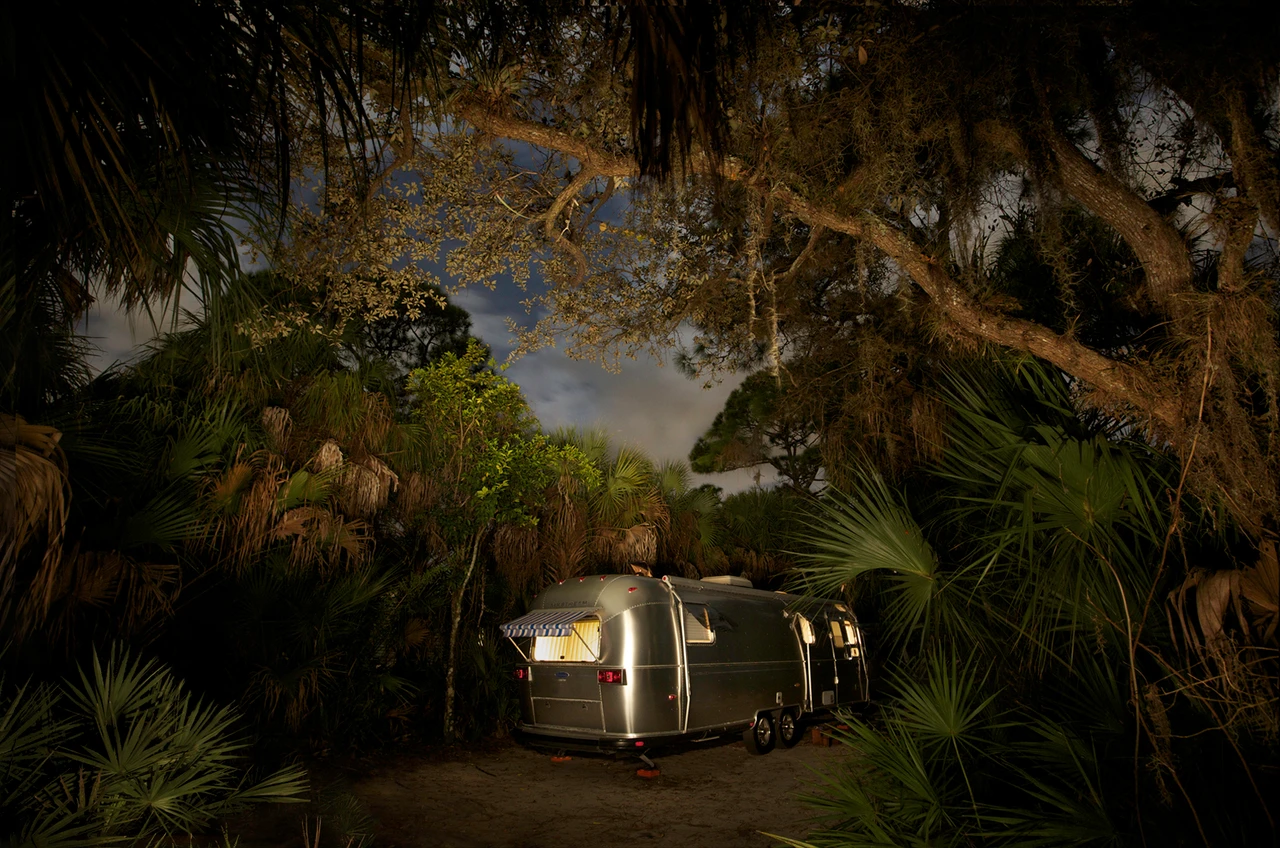

A silver caravan stands in the darkness, surrounded by palmetto plants and hanging tree moss. Its window is illuminated from the inside.
Alumascapes 2012, Frank Hallam Day

2012


Frank Hallam Day

In Alumascapes, illuminated mobile homes in the night-time darkness of Florida appear like small, intact worlds. Hallam Day shows the retreat of a society into artificial security – with shiny surfaces as a protective shield. His quiet discoveries reveal how escapism can become a substitute world, while the reality outside presses on.
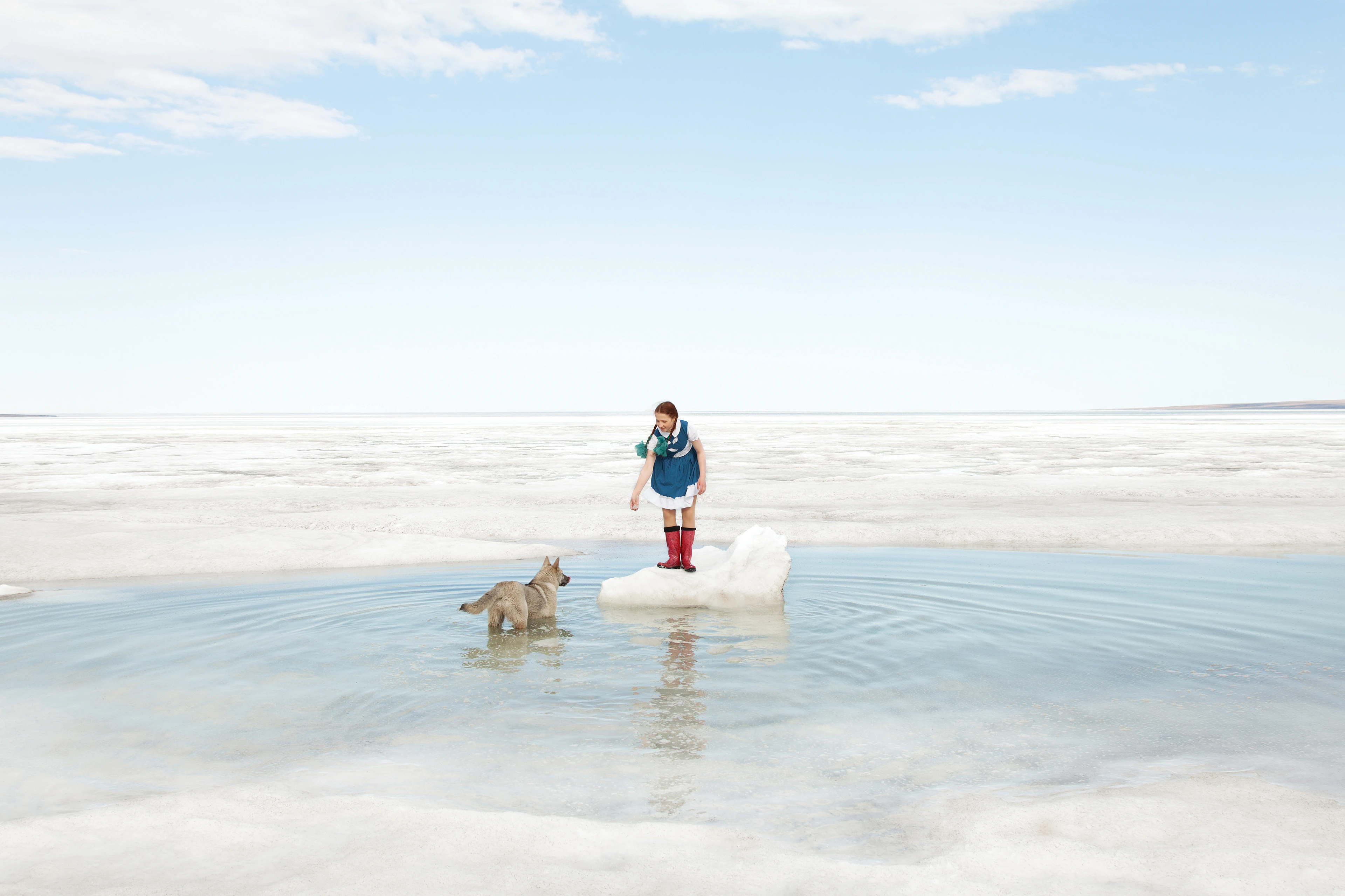

A girl stands in the centre of the picture on a small ice floe in shallow water. She calls and reaches out to a dog wading in the water next to her.
Tiksi 2013, Evgenia Arbugaeva

2013


Evgenia Arbugaeva

For her Tiksi series, Arbugaeva travels back to the Arctic, to the place where she spent her childhood. Amidst the snow, light and endless horizons, she follows a young girl, creating both a poetic reminder of her sense of belonging and a tribute to survival in the face of cold and silence.


Close-up of the fuselage of a passenger aeroplane standing in a large hangar with an open door and huge tubes leading inside.
Field Trip 2014, Martin Kollar

2014


Martin Kollár

In Field Trip, Kollár observes an Israel caught between control and everyday life. Training grounds, waiting and bizarre routines – his precise, almost cinematic scenes reveal the absurdity of normality in a country that always seems ready for a state of emergency.
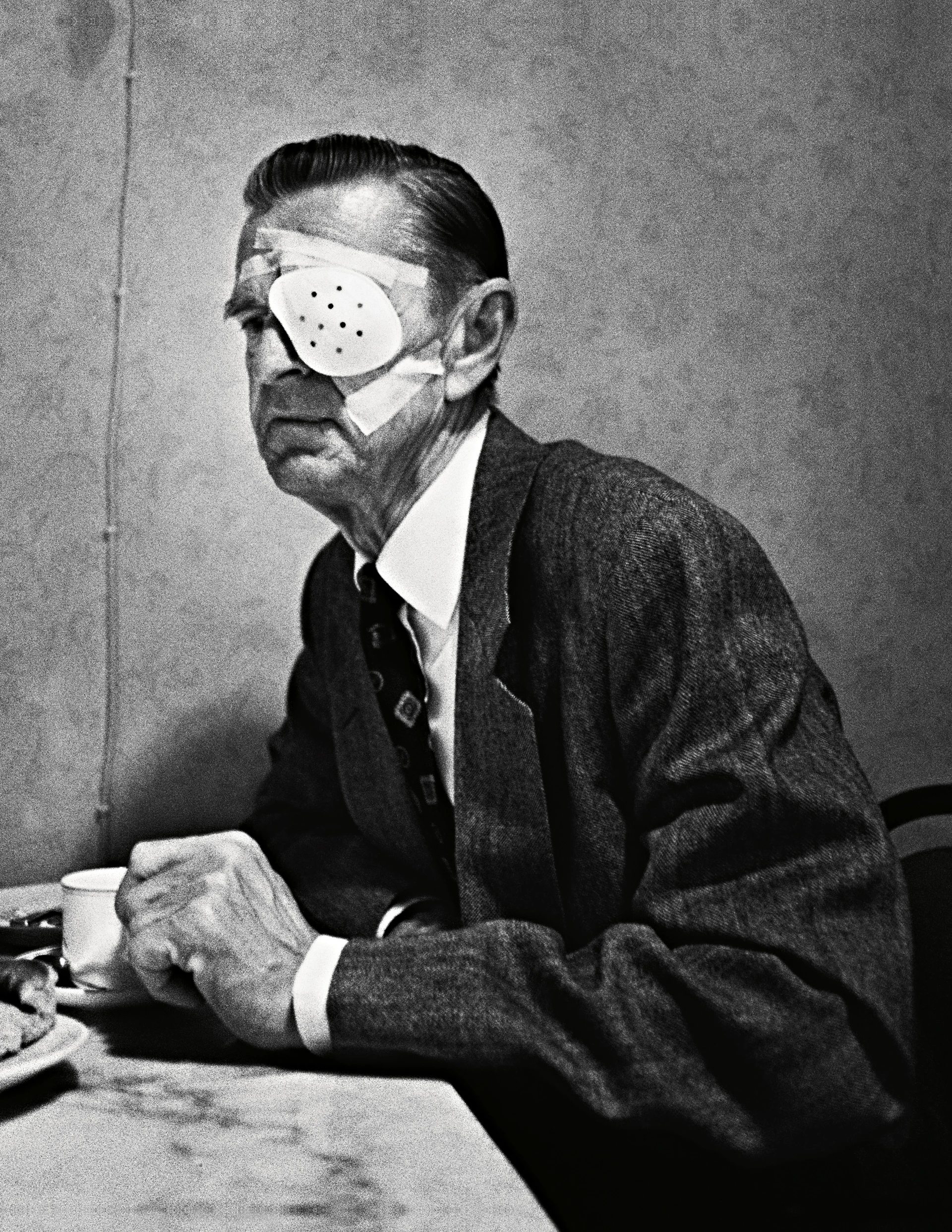

Black-and-white image: An elderly man in a suit sits at a table wearing a large light-coloured eye shield with plasters over his eyes.
Tout Va Bien 2015, JH Engström

2015


JH Engström

Tout va bien is Engström’s visual self-interrogation. Blurred, physical, honest – his photographs oscillate between tenderness and unease, intimacy and distance. This is a series that addresses his identity, memory and the fragility of the moment.
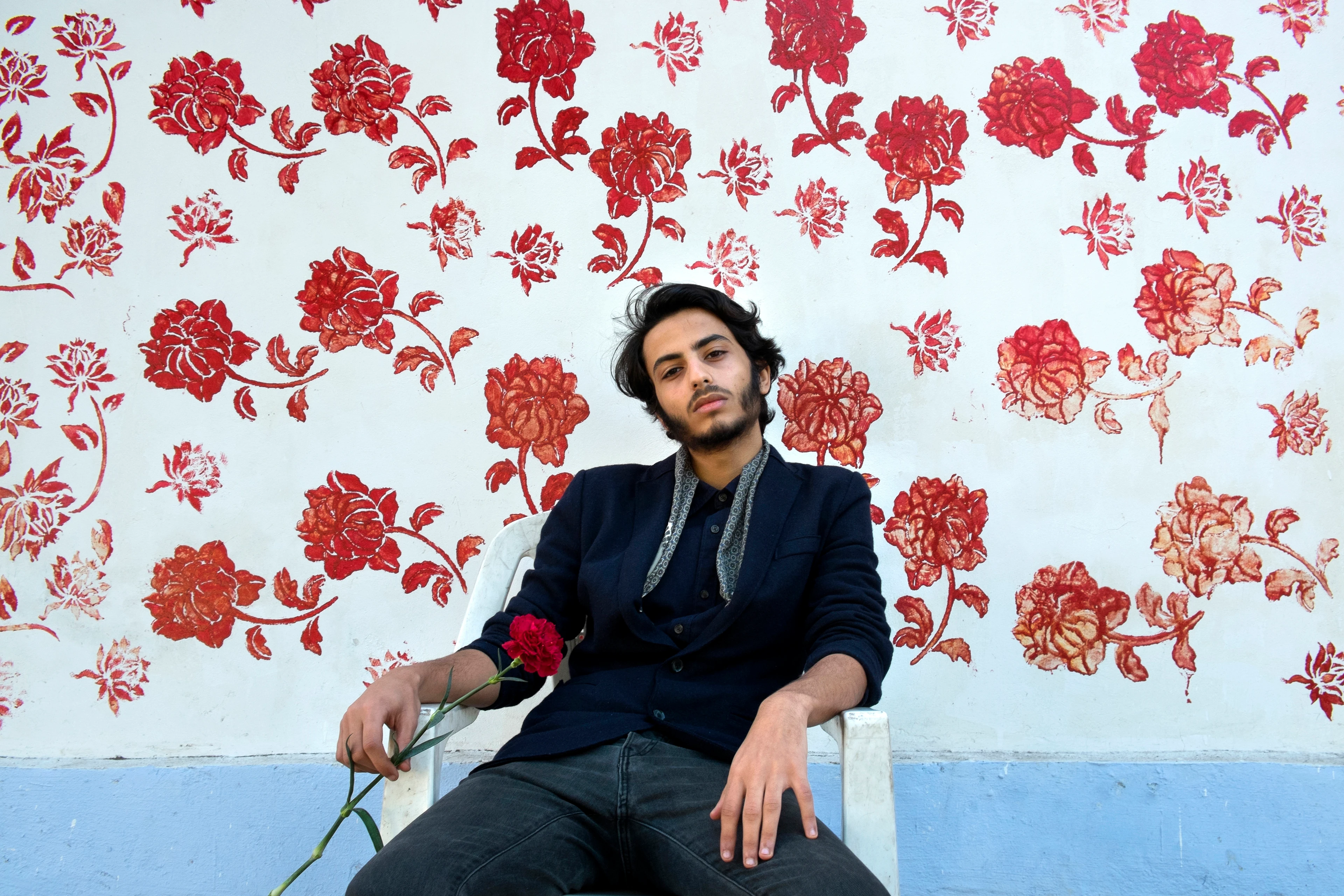

Portrait: A young man with a confident look sits relaxed on a white chair in front of a wall painted with red floral patterns, holding a rose.
Mectoub 2016, Scarlett Coten

2016


Scarlett Coten

In Mectoub, Coten breaks with stereotypes of Arab masculinity. Her portraits are characterised by closeness and respect, showing tenderness, doubt and strength. They are a quiet, powerful statement about gender roles and change in the Middle East.
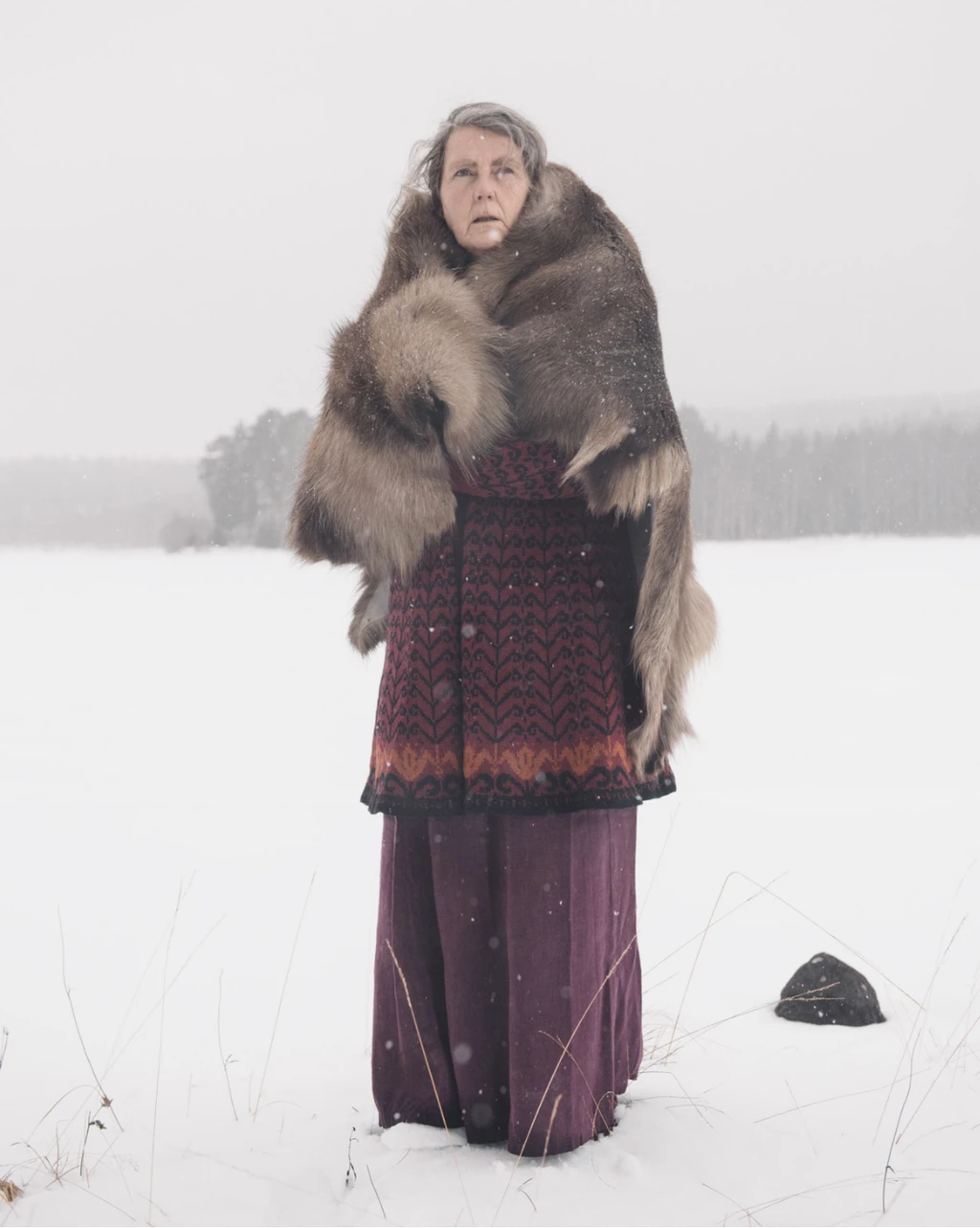

An elderly woman stands in the snowy outdoors, wearing a long dress and with a large pelt draped over her shoulders.
Slash & Burn 2017, Terje Abusdal

2017


Terje Abusdal

With Slash & Burn, Terje Abusdal tells the story of the mythical life of the ‘Forest Finns’. Images emerge between fog, ritual and light that blend history and legend, offering a melancholic perspective on identity and origin.
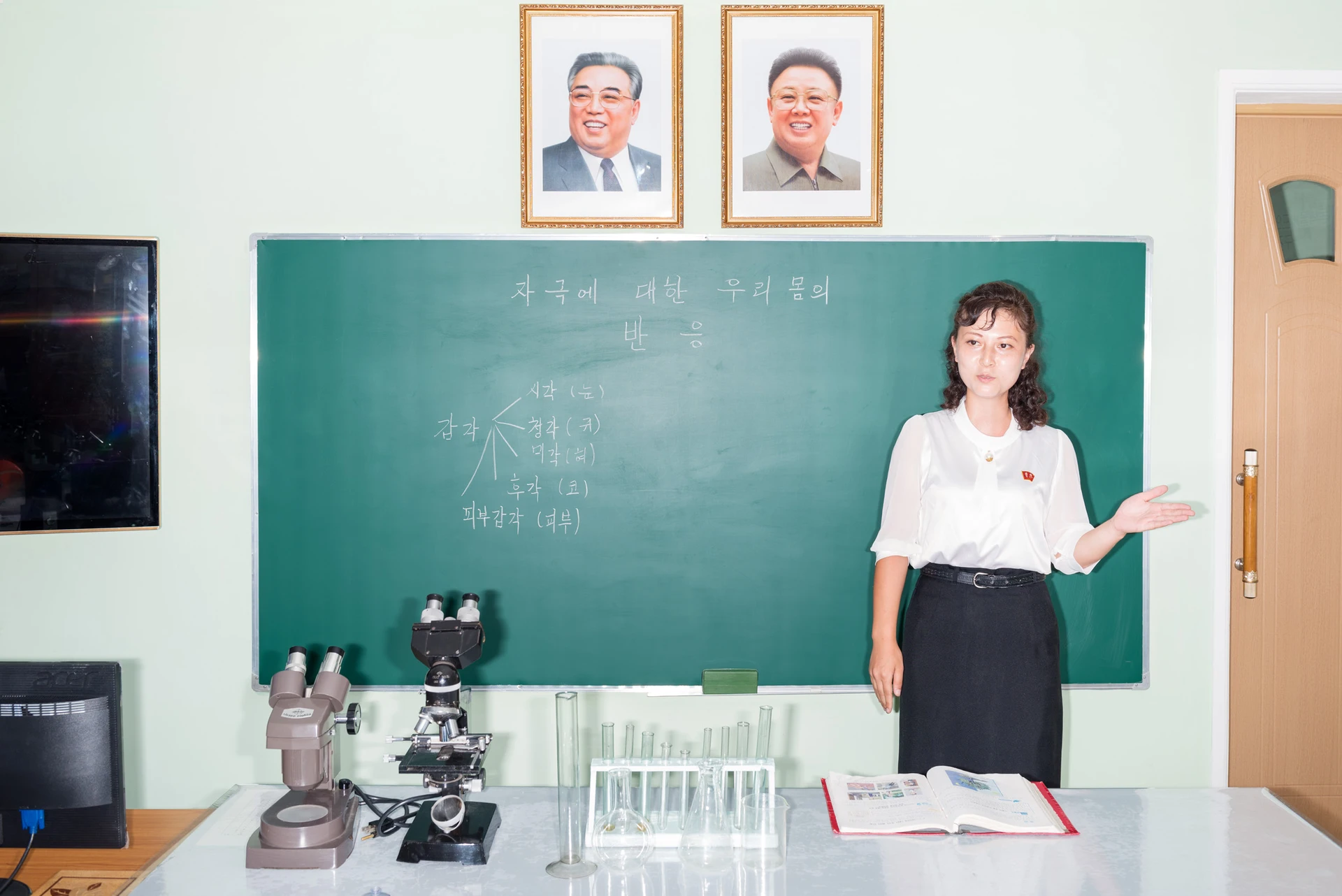

A teacher wearing a white blouse stands in front of a green blackboard, giving a lecture. Microscopes and test tubes are placed on a table in front of her, and two portraits of smiling North Korean political leaders hang above the blackboard.
Red Ink 2018, Max Pinckers

2018


Max Pinckers

In Red Ink, Pinckers explores North Korea as a rarely seen setting. He reflects the truth in a world of staged images. His precise, enigmatic series is a visual study of power, perception and propaganda.
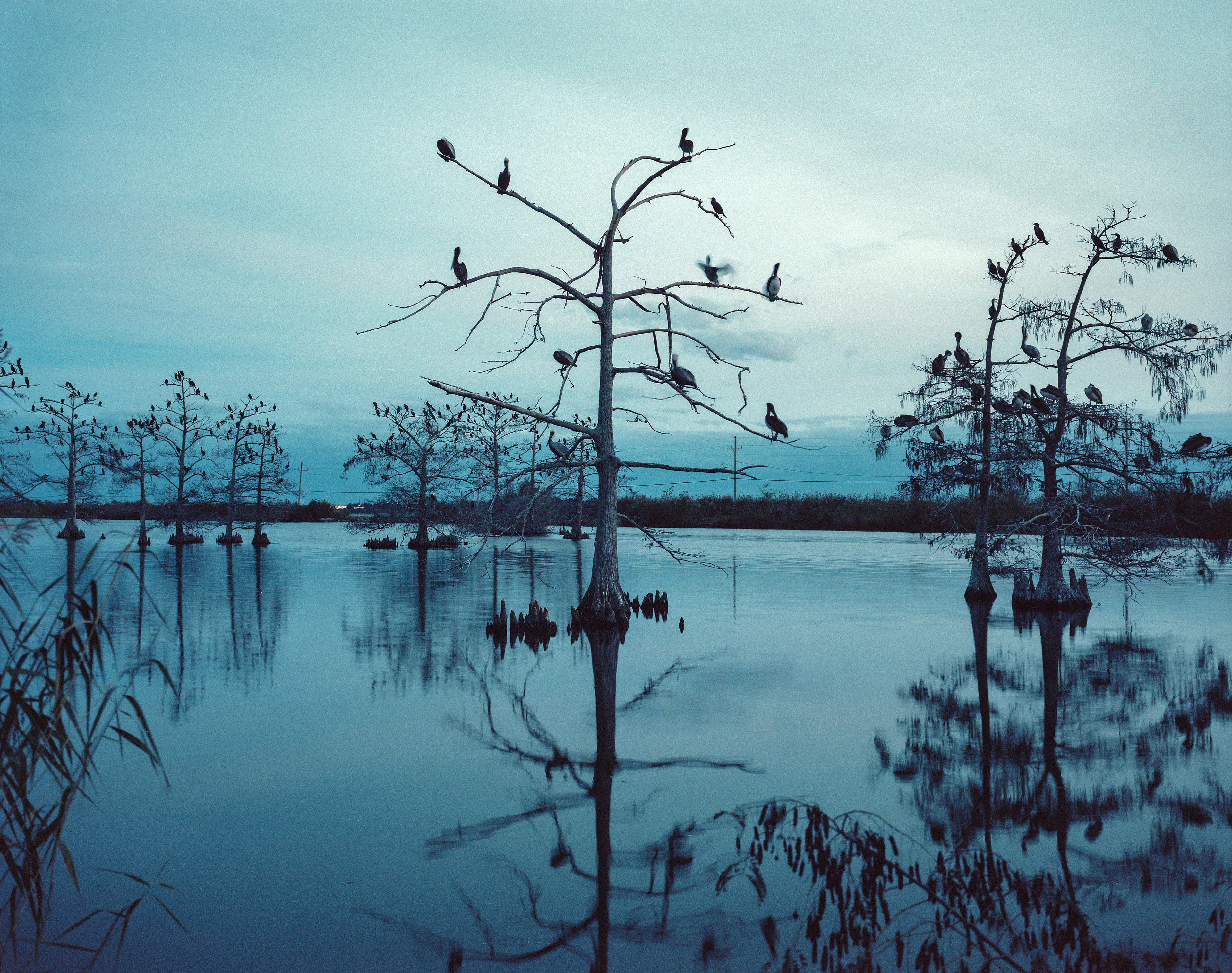

Several bare trees, on which pelicans rest, stand in a flooded area, their reflections visible in the calm water.
Water 2019, Mustafah Abdulaziz

2019


Mustafah Abdulaziz

From flood to drought: with Water, Abdulaziz creates a global portrait of the element that connects everything and can end everything at the same time. In calm, monumental images, he depicts the responsibility and dependence of mankind towards and on nature.


Continue journey