A Moment of Relief
After years of suffering, chaos, and uncertainty, a collective sigh of relief marked the beginning of a new chapter. The war was over. Joyous scenes swiftly circulated across the globe, with many of these iconic moments captured through the lenses of Leica cameras. This is a testament to the unifying force of modern photography – transcending borders, conflicts, and origins to capture moments that bind people and narratives across time. Two especially emblematic Leica photographs emerged as enduring symbols of global relief.
Much More than a Mere Moment
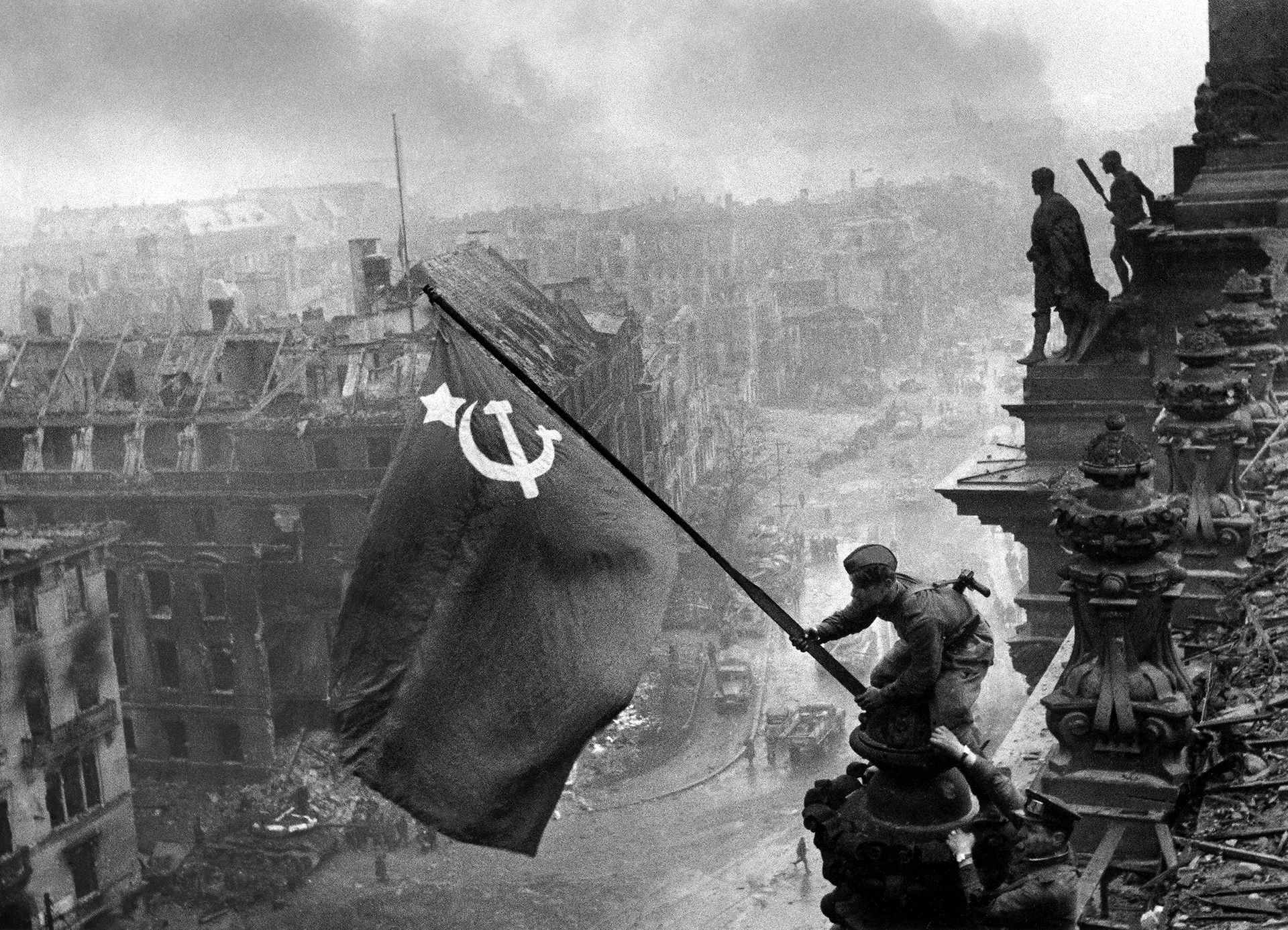
On 2 May 1945, a Soviet soldier hoisted the red flag over the Berlin Reichstag – a moment carefully orchestrated for media portrayal but one that ultimately became an enduring emblem of victory over National Socialism. Beyond its profound impact on global political imagery, the photograph holds particular significance for the Jewish photographer: Yevgeny Khaldei was coming to terms with the loss of his father and three sisters at the hands of the Nazis.
Embracing the Whole World
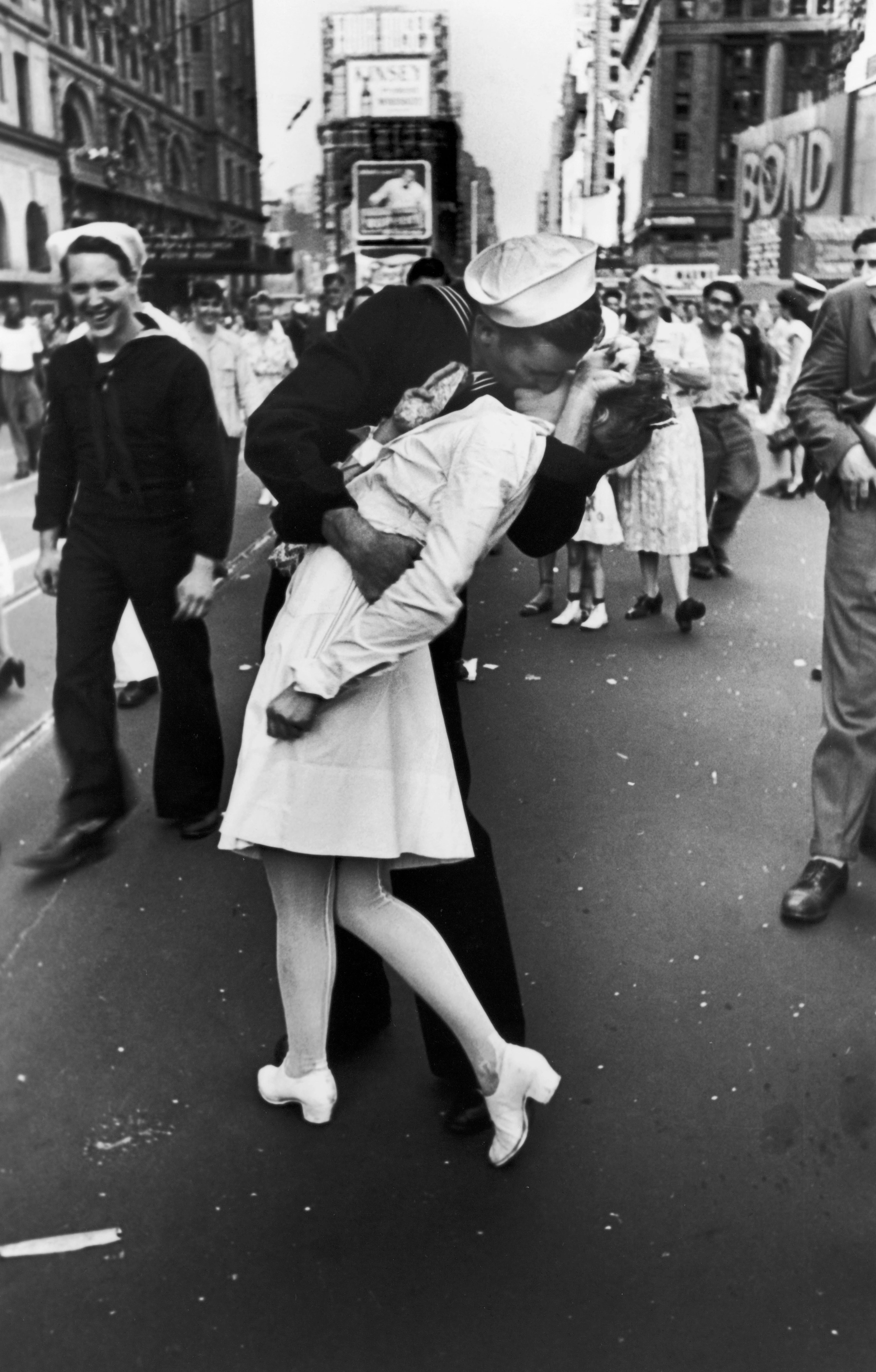
Alfred Eisenstaedt captured the jubilant atmosphere at Times Square as crowds celebrated Japan’s surrender. In a fleeting moment, he caught sight of a sailor reaching for “something white”. Click. The image of the sailor’s spontaneous kiss with the nurse quickly became a global emblem, first gracing the cover of Life magazine before cementing itself as a lasting symbol of post-war relief and celebration. From that moment onwards, it embodied the spirit of exhilaration, renewal, and the unparalleled ability of photojournalism to preserve history in a single frame.
People don’t take me too seriously with my small camera. I’m not coming as a photographer. I’m coming as a friend.– Alfred Eisenstaedt© Alfred Eisenstaedt / The LIFE Picture Collection / Shutterstock
A Long Way to Go
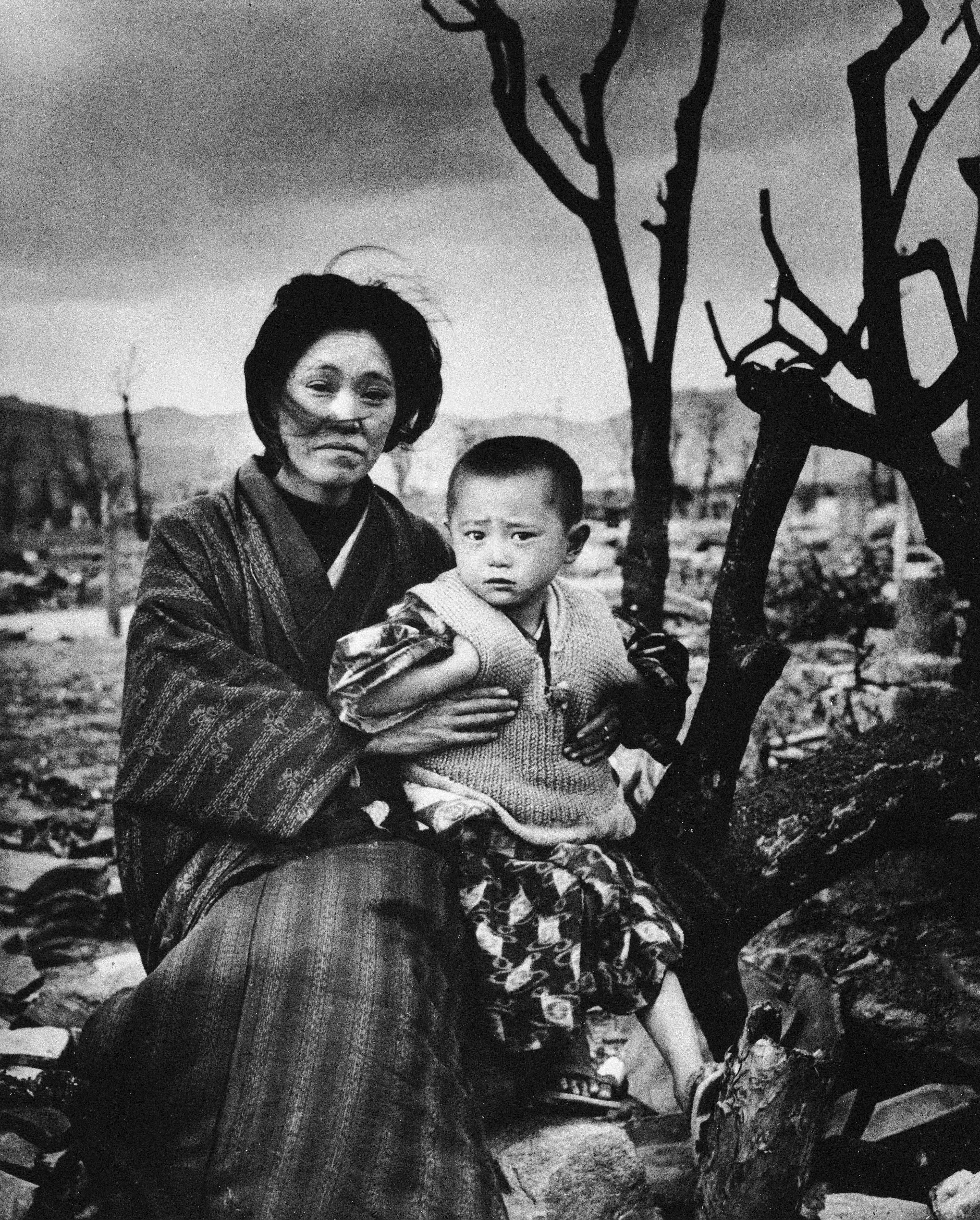
In December 1945, four months after the atomic bomb devastated Hiroshima, Alfred Eisenstaedt visited the city, documenting its aftermath through his lens. The poignant portrait of a mother and her son arose from the ruins. Like Eisenstaedt’s photo of “The Kiss”, this somber image also took on symbolic significance, standing as a stark reminder of the immense destructive power of nuclear weapons, the far-reaching consequences of war, and the deep human suffering it leaves in its wake. It offers an unfiltered reflection on the arduous path towards truly making a new start.